Birding in Uganda: The Ultimate SEO Guide to Birding Destinations, Birds, and Accommodation
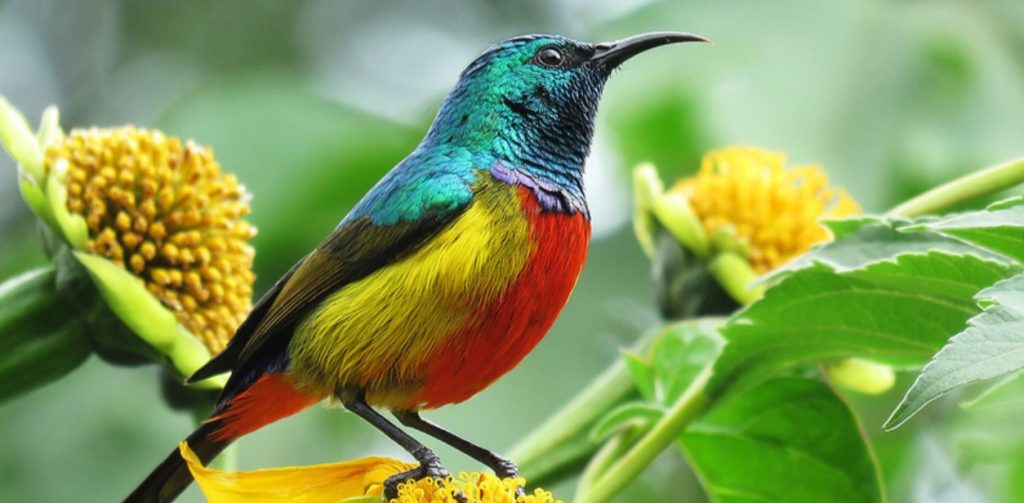
Uganda is one of the most remarkable birding destinations on Earth, hosting over 1,070 bird species, which is more than half of Africa’s total bird population. Its compact size combined with extraordinary ecological diversity ranging from papyrus swamps and tropical rainforests to savannah plains and alpine zones makes it uniquely suited for birdwatchers who want to experience a wide range of habitats in a relatively short time.
This comprehensive guide explores birding in Uganda starting from Mabamba Swamp, then moving across the country’s major birding hotspots. Each destination includes detailed descriptions, notable bird species with scientific names, and accommodation options within or nearby.
- Mabamba Swamp – Uganda’s Iconic Birding Starting Point
Mabamba Swamp, located along the northern shores of Lake Victoria, is widely regarded as the best place in Uganda and one of the best places in Africa to see the legendary Shoebill. The swamp is a vast wetland dominated by papyrus vegetation, forming a labyrinth of narrow channels that are explored by traditional dugout canoes. The experience of gliding silently through these waterways at sunrise, surrounded by bird calls and mist, is one of the most memorable birding encounters in Uganda.
What makes Mabamba particularly special is its reliability for sightings of the Shoebill Stork (Balaeniceps rex), a rare and prehistoric-looking bird that attracts birders from across the globe. In addition to this flagship species, Mabamba supports a rich diversity of wetland birds, many of which are difficult to find elsewhere. The swamp ecosystem also plays a crucial role as a breeding and feeding ground for migratory species, especially during the months between October and March.
Key Bird Species in Mabamba Swamp
- Shoebill Stork (Balaeniceps rex)
- Papyrus Gonolek (Laniarius mufumbiri)
- Blue Swallow (Hirundo atrocaerulea)
- African Jacana (Actophilornis africanus)
- Malachite Kingfisher (Corythornis cristatus)
- Goliath Heron (Ardea goliath)
- Purple Swamphen (Porphyrio porphyrio)
- Yellow-backed Weaver (Ploceus melanocephalus)
Accommodation Near Mabamba
- Nkima Forest Lodge
- Protea Hotel Entebbe
- 2 Friends Beach Hotel
- Jet Villas
- Entebbe Botanical Gardens & Uganda Wildlife Education Centre
Entebbe serves as the gateway to Uganda’s birding circuit, and its botanical gardens offer an excellent introduction to the country’s avian diversity. Situated along the shores of Lake Victoria, the gardens feature a mix of indigenous forest, open lawns, and lakeside habitats that attract a wide variety of bird species. This makes it an ideal first stop for birders who have just arrived in the country and want to begin their checklist immediately.
The nearby Uganda Wildlife Education Centre (UWEC) also provides additional opportunities for birdwatching, particularly for species that thrive in semi-natural environments. The area is especially rewarding for spotting colorful forest birds such as turacos and sunbirds, as well as hornbills and weavers. Because of its accessibility and diversity, Entebbe is often used as a warm-up birding destination before heading deeper into Uganda’s wilderness.
Bird Species
- Great Blue Turaco (Corythaeola cristata)
- Ross’s Turaco (Musophaga rossae)
- Red-chested Cuckoo (Cuculus solitarius)
- African Pied Hornbill (Lophoceros fasciatus)
- Copper Sunbird (Cinnyris cupreus)
Accommodation
- Lake Victoria Hotel
- Imperial Botanical Beach Hotel
- Best Western Premier Garden Hotel
- Mabira Forest Reserve
Mabira Forest is one of Uganda’s largest surviving natural forests and lies conveniently along the Kampala–Jinja highway. This makes it an easily accessible yet incredibly rewarding destination for birders seeking forest species without traveling far from the capital. The forest is characterized by tall trees, dense undergrowth, and a network of trails that allow birders to explore different ecological zones.
Mabira is particularly important for its population of rare and localized forest birds, including the elusive Green-breasted Pitta (Pitta reichenowi), which is a major target for serious birders. The forest is also home to mixed-species feeding flocks, offering opportunities to observe multiple bird species in a short period. Its proximity to urban centers combined with its biodiversity makes Mabira a must-visit destination on any Ugandan birding itinerary.
Bird Species
- Nahan’s Francolin (Ptilopachus nahani)
- Green-breasted Pitta (Pitta reichenowi)
- Yellow-spotted Barbet (Buccanodon duchaillui)
- Cassin’s Honeyguide (Indicator conirostris)
- Purple-throated Cuckooshrike (Campephaga quiscalina)
Accommodation
- Rainforest Lodge Mabira
- Griffin Falls Camp
- Kibale Forest National Park & Bigodi Wetland
Kibale Forest National Park is one of the most biologically diverse forests in Africa and is particularly renowned for its primate populations. However, it is equally impressive as a birding destination, with over 370 recorded species. The forest consists of a mix of evergreen and semi-deciduous vegetation, providing ideal habitats for a wide range of forest birds.
Adjacent to Kibale lies the Bigodi Wetland Sanctuary, a community-run conservation area that complements the forest birding experience. Bigodi’s swampy terrain is especially good for spotting species that prefer wetland edges and dense vegetation. Together, Kibale and Bigodi offer a rich and varied birding experience that combines forest interiors with wetland ecosystems.
Bird Species
- Great Blue Turaco (Corythaeola cristata)
- White-spotted Flufftail (Sarothrura pulchra)
- Black-capped Apalis (Apalis nigriceps)
- Purple-breasted Sunbird (Cinnyris bifasciatus)
- Yellow-billed Barbet (Trachyphonus purpuratus)
Accommodation
- Primate Lodge Kibale
- Kyaninga Lodge
- Turaco Treetops Lodge
- Queen Elizabeth National Park
Queen Elizabeth National Park is Uganda’s most diverse protected area for birdlife, with over 600 species recorded. The park’s varied landscapes including savannah grasslands, wetlands, crater lakes, and forests create a mosaic of habitats that support an incredible range of bird species. The Kazinga Channel, which connects Lake Edward and Lake George, is particularly famous for its dense concentrations of water birds.
Birding in Queen Elizabeth National Park is both rewarding and scenic, with opportunities to combine birdwatching with game drives and boat safaris. The Ishasha sector, known for its tree-climbing lions, also offers excellent birding opportunities, especially for species that prefer riverine and fig tree habitats.
Bird Species
- African Skimmer (Rynchops flavirostris)
- Martial Eagle (Polemaetus bellicosus)
- Verreaux’s Eagle-Owl (Bubo lacteus)
- Pink-backed Pelican (Pelecanus rufescens)
- Black-headed Gonolek (Laniarius erythrogaster)
Accommodation
- Mweya Safari Lodge
- Ishasha Wilderness Camp
- Elephant Plains Lodge
- Bwindi Impenetrable National Park
Bwindi Impenetrable National Park is not only famous for its mountain gorillas but also for its exceptional birdlife, particularly Albertine Rift endemics. The park’s dense montane forest provides a unique habitat for species that are rarely found elsewhere in the world.
Birding in Bwindi can be challenging due to the thick vegetation and steep terrain, but it is immensely rewarding. Experienced guides are essential to help locate elusive species, many of which are highly sought after by birders aiming to complete regional or global checklists.
Bird Species
- African Green Broadbill (Pseudocalyptomena graueri)
- Regal Sunbird (Cinnyris regius)
- Shelley’s Crimsonwing (Cryptospiza shelleyi)
- Handsome Francolin (Pternistis nobilis)
- Rwenzori Apalis (Apalis ruwenzorii)
Accommodation
- Buhoma Lodge
- Mahogany Springs Lodge
- Nkuringo Bwindi Gorilla Lodge
- Murchison Falls National Park
Murchison Falls National Park is Uganda’s largest and one of its most dramatic landscapes, where the Nile River forces its way through a narrow gorge before plunging into a powerful waterfall. This unique geography creates diverse habitats that support a wide array of bird species.
Birding here is particularly rewarding along the Nile and in the delta area, where waterbirds are abundant. Game drives across the savannah also reveal raptors, ground birds, and large species such as hornbills and bustards.
Bird Species
- Shoebill Stork (Balaeniceps rex)
- Abyssinian Ground Hornbill (Bucorvus abyssinicus)
- Secretary Bird (Sagittarius serpentarius)
- Denham’s Bustard (Neotis denhami)
- Goliath Heron (Ardea goliath)
Accommodation
- Paraa Safari Lodge
- Nile Safari Lodge
- Pakuba Safari Lodge
- Lake Mburo National Park
Lake Mburo National Park is a compact yet highly productive birding destination, particularly known for its acacia woodland and wetland habitats. Its proximity to Kampala makes it a popular stopover for birders traveling to southwestern Uganda.
Bird Species
- African Wattled Lapwing (Vanellus senegallus)
- Lilac-breasted Roller (Coracias caudatus)
- Yellow-throated Longclaw (Macronyx croceus)
Accommodation
- Mihingo Lodge
- Rwakobo Rock Lodge
Conclusion
Birding in Uganda offers an unmatched combination of species diversity, scenic beauty, and accessibility. From the iconic Shoebill in Mabamba Swamp to the rare Albertine Rift endemics in Bwindi, Uganda provides a complete and deeply rewarding birding experience.
With well-distributed accommodations and a variety of habitats packed into a relatively small country, Uganda truly stands out as Africa’s top birding destination.