Gorilla Festival in Rwanda: The Complete Guide to Kwita Izina and Mountain Gorilla Trekking
Few wildlife celebrations in Africa combine conservation, culture, tourism, community participation, and international attention quite like Rwanda’s famous Gorilla Festival. Officially known as Kwita Izina, the annual gorilla naming ceremony has grown from a conservation initiative into one of the most recognizable wildlife celebrations on the African continent. Every year, conservationists, travelers, local communities, researchers, tourism professionals, celebrities, government representatives, and nature lovers gather near Volcanoes National Park to celebrate newly born mountain gorillas and the people who dedicate their lives to protecting them.
For travelers planning an African safari, attending the Gorilla Festival can add something completely different to an ordinary holiday. Instead of simply visiting a national park and returning home, visitors get an opportunity to experience the relationship between people, wildlife, tourism, and conservation. Traditional performances fill the festival grounds, conservation stories are shared, newborn gorillas receive meaningful names, and communities surrounding Volcanoes National Park take center stage.
At Trumpet Adventures, we believe a journey to see mountain gorillas should tell a bigger story than the trek itself. Gorilla tourism connects travelers with one of Africa’s rarest primates while contributing to conservation and local livelihoods. Combining a gorilla trekking safari with the Gorilla Festival can therefore turn a wildlife holiday into an unforgettable cultural and conservation experience.
Whether you want to attend Kwita Izina, trek mountain gorillas in Rwanda, combine Rwanda with Uganda, explore Volcanoes National Park, or plan a longer East African safari, this detailed guide explains what you need to know about the Gorilla Festival and how to include it in your African adventure.
What Is the Gorilla Festival?
The term Gorilla Festival is commonly used by travelers to describe Kwita Izina, Rwanda’s annual mountain gorilla naming ceremony. Kwita Izina means giving or assigning a name in Kinyarwanda. The celebration draws inspiration from Rwanda’s long-standing tradition of welcoming newborn children into families and communities through naming ceremonies.
Rwanda adapted this cultural idea to mountain gorilla conservation. Instead of treating newborn gorillas only as animals recorded by researchers, the naming ceremony gives each youngster an identity while drawing public attention to its survival, family, habitat, and conservation story.
The public Kwita Izina program began in 2005 and has developed into an internationally recognized conservation event. The official event has included community activities, conservation discussions, cultural entertainment, and the main naming ceremony in Kinigi near Volcanoes National Park. Earlier editions also included conservation conferences and community projects.
The 2026 ceremony was the 21st Kwita Izina Gorilla Naming Ceremony. It took place on Friday, 4 September 2026, in Kinigi, Musanze District. The event brought together participants from conservation, tourism, business, sport, entertainment, philanthropy and public service.
Consequently, describing Kwita Izina simply as a festival does not fully capture its importance. Music and celebration form part of the experience, but conservation remains at its heart.
Why Is Kwita Izina Important?
Mountain gorillas survive naturally in only a small part of Africa. Their remaining habitat lies within Uganda, Rwanda, and the Democratic Republic of Congo. Protecting these forests requires constant monitoring, veterinary care, anti-poaching programs, habitat protection, community involvement, scientific research, and responsible tourism.
Kwita Izina helps place those conservation efforts before an international audience.
Instead of discussing endangered wildlife only through statistics, the festival makes conservation personal. A young gorilla receives a name. Visitors see its photograph. Conservationists explain its story. Rangers who monitor gorilla families receive recognition. Communities living beside protected areas participate in celebrations, while travelers learn why responsible tourism matters.
Mountain gorilla conservation has achieved remarkable progress. The International Gorilla Conservation Programme currently cites an estimated global population of 1,063 mountain gorillas in the wild, based on the most recent combined census figures available from the Virunga and Bwindi-Sarambwe populations.
The number alone does not mean conservation work is finished. Mountain gorillas remain endangered, and their restricted habitat makes long-term protection essential. Nevertheless, their recovery demonstrates what sustained conservation cooperation can achieve.
This makes Kwita Izina a celebration of both progress and responsibility.
Where Does the Gorilla Festival Take Place?
Kwita Izina takes place in Kinigi, Musanze District, close to Rwanda’s Volcanoes National Park. This part of northern Rwanda offers one of East Africa’s most spectacular landscapes. Green farmland spreads across rolling hills while the massive Virunga volcanoes rise dramatically along the horizon.
Kinigi is particularly important because it serves as the main gateway for gorilla trekking in Volcanoes National Park.
Travelers normally arrive at the park’s visitor facilities early in the morning before beginning a gorilla trek. During Kwita Izina, however, the area takes on a completely different atmosphere. Tourism professionals arrive from different countries, media teams cover the celebration, cultural performers entertain visitors, local businesses become busier, and conservation receives international attention.
Musanze is the main urban center near the park and provides a wide range of accommodation, restaurants, transport services, shops, and tourism facilities.
The journey from Kigali also makes the region convenient for international travelers. Visitors can fly into Kigali and travel north through Rwanda’s beautiful countryside toward Musanze and Volcanoes National Park.
For guests traveling with Trumpet Adventures, the transfer can become part of the experience rather than simply transportation between two places. The route provides an introduction to Rwanda’s countryside, rural settlements, agricultural landscapes, and mountainous terrain.
Understanding the Meaning of Kwita Izina
The cultural foundation of Kwita Izina makes the event particularly interesting.
Traditionally, naming holds deep significance in Rwandan society. A name may express hope, gratitude, character, family history, circumstances surrounding birth, or wishes for the future. Applying this idea to mountain gorillas creates an emotional connection between conservation and cultural heritage.
Each gorilla name therefore carries meaning.
Some names communicate hope. Others refer to strength, unity, protection, peace, prosperity, resilience, or nature. Certain choices may reflect circumstances surrounding a gorilla’s birth, while others communicate broader conservation messages.
This symbolic element separates Kwita Izina from a simple wildlife festival.
Rather than giving animals random labels, the ceremony celebrates each newborn as an individual member of a monitored gorilla family.
Researchers and trackers already need to identify individual gorillas for scientific purposes. Names allow teams to follow family relationships, movements, births, deaths, leadership changes, health issues, and behavioral patterns. Kwita Izina takes that scientific identification and transforms it into a national and international conservation story.
The History of the Gorilla Naming Ceremony
Rwanda formally established the public Kwita Izina ceremony in 2005, although conservation teams had been identifying and naming gorillas for monitoring purposes long before the public festival began.
The decision to create a national celebration brought conservation closer to ordinary citizens and international travelers.
Over subsequent years, Kwita Izina expanded dramatically. Conservation conferences, community celebrations, environmental programs, tourism events, and international guests became part of the wider experience.
For example, the 2011 edition included a conservation conference, community development projects, a community celebration, and the main gorilla naming ceremony. That year’s official program emphasized community development and sustained conservation.
These activities demonstrated an important principle: wildlife protection cannot succeed in isolation.
A national park exists within a broader human landscape. Families live outside its boundaries. Farmers cultivate nearby land. Children attend surrounding schools. Tourism businesses employ residents. Guides, trackers, porters, artisans, drivers, lodge staff, and farmers all interact with the tourism economy.
For conservation to remain successful, neighboring communities need to see tangible value in protecting natural resources.
Kwita Izina provides a highly visible platform for communicating that connection.
Kwita Izina 2026
The 21st Kwita Izina Gorilla Naming Ceremony took place on 4 September 2026 in Kinigi, Musanze District. Its theme was “Conservation is Life: Sustaining the Future.”
The ceremony brought together prominent people from several fields, including conservation, sport, tourism, entertainment, business and public service.
Invited names included former international football players, conservation personalities, business leaders and other well-known figures. The official Kwita Izina website listed participants including Patrice Evra, Mamadou Sakho, filmmaker Alastair Fothergill and other international guests.
Bringing globally recognized personalities into the ceremony attracts attention well beyond Rwanda. A football supporter who has never previously considered a gorilla safari may suddenly discover Volcanoes National Park after seeing a familiar athlete at Kwita Izina. Nature documentary enthusiasts may become interested after following a famous filmmaker. Conservation organizations can use the exposure to educate new audiences.
Tourism and conservation therefore reinforce one another.
Mountain Gorillas: The Stars Behind the Festival
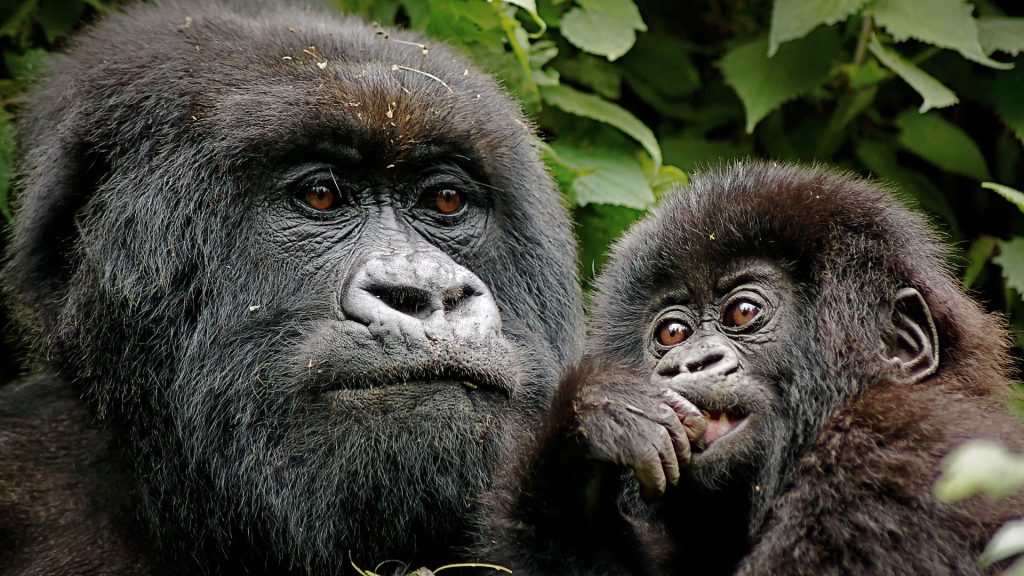
Mountain gorillas are among Africa’s most fascinating animals. They belong to the eastern gorilla species and inhabit high-altitude forests within the Virunga Massif and Bwindi-Sarambwe landscape.
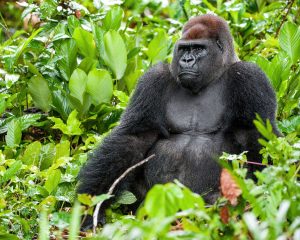
Their physical appearance immediately captures attention. Adult males develop a distinctive silver-colored saddle across their backs and become known as silverbacks. These powerful animals can appear intimidating, yet gorilla life revolves heavily around family relationships, feeding, resting, communication, protection, and social interaction.
A gorilla family normally includes a combination of adult males, adult females, juveniles and infants.
The dominant silverback plays an important leadership role. He may determine movement, intervene during disputes, and protect the group from threats. Females invest heavily in raising offspring, while younger gorillas frequently display playful behavior that delights visitors fortunate enough to observe them.
Watching a gorilla family in its natural environment often changes the way people understand wildlife.
A photograph shows appearance.
A documentary shows movement.
Standing quietly in an African forest while a silverback watches over his family creates something much deeper.
That emotional connection helps explain why gorilla tourism has become one of East Africa’s most desired wildlife experiences.
Mountain Gorilla Conservation Success
The story behind Kwita Izina becomes more meaningful when visitors understand how vulnerable mountain gorillas once were.
Habitat destruction, poaching, regional conflict, snares, disease transmission, and human pressure created major threats over many decades.
Conservation organizations, governments and local communities responded with increasingly coordinated protection.
Rangers patrol forests.
Veterinary teams intervene when necessary.
Researchers monitor individuals.
Tourism is carefully controlled.
Communities participate in conservation programs.
International organizations provide technical and financial assistance.
Because mountain gorillas range across international boundaries, cooperation between Uganda, Rwanda and the Democratic Republic of Congo also remains essential.
The latest widely cited census figures place the known global wild population at 1,063 individuals. The International Gorilla Conservation Programme notes that mountain gorillas moved from Critically Endangered to Endangered on the IUCN Red List following a 2018 assessment.
That improvement represents a rare conservation achievement among great apes.
Still, endangered does not mean safe forever.
A small population living within a restricted geographic area can quickly become vulnerable to disease outbreaks, habitat pressure, climate-related changes, or political instability. Continued protection therefore remains necessary.
Kwita Izina reminds visitors that successful conservation is not an endpoint. It is an ongoing commitment.
What Happens During the Gorilla Festival?
Visitors attending the Gorilla Festival can expect much more than the announcement of names.
The exact program changes between editions, but the festival commonly combines conservation messages, cultural entertainment, community participation, speeches, and the central naming ceremony.
Traditional music and dance bring energy to the event. Colorful clothing, drums, and performances create a distinctly Rwandan atmosphere. Guests gather around the main venue while large displays introduce baby gorillas and conservation stories.
When the naming begins, invited participants announce selected names and often explain their meanings.
These moments can become surprisingly emotional.
A newborn gorilla represents continuity within a species that once faced an extremely uncertain future.
Every birth matters.
Behind one healthy infant stand countless hours of ranger patrols, veterinary work, research, community engagement, and forest protection.
The celebration gives those efforts a face.
Traditional Culture at Kwita Izina
Culture plays a major role in the festival.
Rwanda has a rich heritage of dance, music, storytelling, craftsmanship and ceremony. Visitors may see energetic traditional performances accompanied by drums and carefully coordinated movement.
These elements are not merely entertainment added for tourists.
They connect gorilla conservation to Rwandan identity.
Wildlife tourism becomes more meaningful when visitors understand the people and cultures surrounding protected areas. A national park does not exist separately from a country’s history. Local customs, livelihoods, and landscapes all contribute to the character of a destination.
Combining cultural experiences with gorilla trekking encourages travelers to remain longer and explore more widely.
Instead of flying into Rwanda, trekking once and immediately departing, visitors can spend time in Kigali, Musanze and rural communities. They can learn about traditional lifestyles, sample local cuisine, visit craft centers, and hear conservation stories directly from residents.
Trumpet Adventures can incorporate these experiences into customized itineraries for guests who want more than a short gorilla excursion.
Gorilla Trekking During the Festival
For many international travelers, the perfect Gorilla Festival holiday combines Kwita Izina with an actual mountain gorilla trek.
Volcanoes National Park provides Rwanda’s famous gorilla trekking experience.
Travelers report early in the morning for registration, briefing, and assignment to gorilla groups. Current Rwanda Development Board information requires visitors to report at approximately 7:00 a.m., and the minimum trekking age is 15 years.
After the briefing, visitors travel toward the appropriate trailhead before entering the forest with guides, trackers, and rangers.
The trek length varies considerably.
A gorilla family may be relatively close on one day and farther into the forest on another. Gorillas move naturally through their environment, so trekking times cannot be guaranteed.
Terrain also varies.
Visitors may walk through bamboo forest, thick vegetation, muddy trails, and steep mountain slopes. Weather conditions can change quickly at higher elevations.
That unpredictability forms part of the adventure.
Eventually, trackers locate the assigned family. The atmosphere often changes immediately.
Conversation becomes quieter.
Cameras are prepared.
Visitors follow ranger instructions carefully.
Then a dark shape emerges between the vegetation.
Perhaps an adult female is feeding.
A juvenile may climb through nearby branches.
An infant might remain close to its mother.
Finally, a huge silverback can appear from vegetation only meters away.
For many travelers, that hour becomes one of the most memorable wildlife experiences of their lives.
Rwanda Gorilla Permit Price
Rwanda manages gorilla tourism through a controlled permit system.
The standard permit rate for an international foreign visitor is currently US$1,500 per person per trek. Rwanda Development Board also lists different promotional rates for some categories of Rwandan, East African, African, and resident visitors, although eligibility requirements and seasonal restrictions apply.
Travelers should always confirm current prices before booking because government rates, promotional offers and conditions can change.
A permit generally covers entry for the gorilla experience, ranger services and the regulated visit with a habituated gorilla family. Transport, accommodation, meals, porter services, visas, travel insurance and other safari expenses normally remain separate unless included within a tour package.
Trumpet Adventures can arrange the wider itinerary around the permit, including accommodation, transportation and additional activities.
Because demand becomes particularly high around major tourism events such as Kwita Izina, early planning is advisable.
Gorilla Festival in Rwanda
Why Gorilla Permits Are Limited
Gorilla trekking is intentionally different from a normal mass tourism attraction.
Visitors cannot simply arrive with hundreds of other tourists and enter the forest.
Numbers remain controlled because mountain gorillas require protection from excessive disturbance and disease transmission.
Human beings and gorillas share biological similarities, which creates disease risks. Respiratory infections that seem minor to humans can present serious concerns for wild primates.
Limiting visitor numbers reduces pressure on gorilla families.
Rules also govern behavior during encounters.
Visitors should listen closely to ranger instructions, maintain the required distance whenever possible, avoid trekking when suffering from contagious illness, keep voices low, and never attempt to touch gorillas.
Current Rwanda Development Board guidance specifies a distance of approximately seven meters and states that visitors with colds, flu, or other contagious illnesses should not visit gorillas.
Responsible tourism protects the same animals that visitors have traveled so far to see.
Gorilla Festival in Rwanda
What to Expect on a Gorilla Trek
Gorilla trekking begins long before the first gorilla appears.
Morning air around Volcanoes National Park can feel cool and fresh. Mist may cover sections of the Virunga mountains while guides organize visitors into trekking groups.
After introductions and safety instructions, groups travel toward different starting points.
Porters are often available and can become extremely helpful. Carrying a backpack may seem easy at the beginning, but slippery trails and steep slopes can quickly make extra assistance valuable.
Hiring a porter also contributes directly to local employment.
Once inside the forest, trekkers follow their guide through dense vegetation. Rangers may communicate with trackers who entered earlier to locate the gorillas.
Fresh signs reveal when a family is nearby.
Broken vegetation, feeding remains, or fresh tracks may indicate recent movement.
Eventually, the guide may ask everyone to prepare cameras and leave walking sticks or bags behind as appropriate.
The final approach brings anticipation.
Nothing quite prepares a first-time visitor for seeing a wild mountain gorilla at close range.
Their facial expressions feel remarkably familiar.
Dark eyes appear observant and calm.
Hands manipulate vegetation with incredible precision.
Infants cling to their mothers while energetic juveniles tumble through undergrowth.
Meanwhile, the silverback’s size communicates immense power without needing dramatic behavior.
The experience feels intimate because group sizes are restricted.
Visitors spend their permitted viewing period observing, photographing, and listening while guides interpret gorilla behavior.
Afterward, everyone returns through the forest carrying a completely different understanding of the species.
Combining Kwita Izina and Gorilla Trekking
Combining the festival with trekking requires careful planning because accommodation and permits can become highly sought after.
A practical itinerary might begin in Kigali before continuing to Musanze.
Travelers can spend their first day exploring Rwanda’s capital, recover from an international flight, and learn more about the country’s culture.
The following day could involve the journey north toward Volcanoes National Park.
Depending on festival dates, guests might attend Kwita Izina before trekking or complete their gorilla experience first.
Both options work well.
Some people prefer attending the festival before trekking because the stories, conservation information, and names build anticipation for the forest encounter.
Others prefer trekking first. After meeting a gorilla family personally, the festival becomes emotionally stronger because the traveler already understands what conservation teams are protecting.
Trumpet Adventures can arrange the order according to permit availability and the confirmed event schedule.
Suggested 5-Day Gorilla Festival Safari
Day 1: Arrival in Kigali
Your Trumpet Adventures representative welcomes you on arrival at Kigali International Airport and transfers you to your hotel.
Depending on arrival time, you can relax or begin exploring the city.
Kigali provides a comfortable introduction to Rwanda. Clean streets, rolling hills, restaurants, cultural spaces and markets create an interesting contrast to the mountain forests that await farther north.
An optional city tour can include historical and cultural attractions before returning to the hotel for dinner and overnight accommodation.
Day 2: Kigali to Volcanoes National Park
After breakfast, begin the scenic journey toward Musanze.
The road gradually leaves the urban environment and enters Rwanda’s famous countryside. Terraced hills, cultivated fields, small settlements, and distant mountains create excellent photography opportunities.
Arrive near Volcanoes National Park and check into your selected lodge.
The afternoon can remain relaxed, allowing you to prepare for the next day’s activities.
Guests interested in culture may choose a community experience, village visit or local craft activity.
Dinner and overnight near the park.
Day 3: Gorilla Trekking
Wake early for breakfast before transferring to the park headquarters.
After registration and briefing, meet your ranger guides and receive an allocated gorilla family.
Proceed to the trailhead and begin trekking.
The forest walk may last several hours depending on the gorillas’ location. Once trackers locate the family, enjoy the regulated viewing experience while following ranger instructions.
Observe feeding behavior, social interactions, and family relationships.
Photography is encouraged, but visitors should avoid flash and respect all conservation rules.
Return to your lodge afterward for lunch or relaxation.
The evening provides an excellent opportunity to review photographs and reflect on one of Africa’s most remarkable wildlife encounters.
Day 4: Kwita Izina Gorilla Festival
Today centers on Rwanda’s famous Gorilla Festival.
Travel to the festival venue in Kinigi and join conservationists, residents, tourism professionals, and international visitors for the celebration.
Enjoy cultural performances, listen to conservation messages, and witness the naming of young mountain gorillas.
The atmosphere differs completely from your quiet forest encounter the previous day.
Here, conservation becomes a public celebration.
Thousands of individual conservation actions come together in one event that honors newborn gorillas and the people protecting them.
After the ceremony, return to your lodge.
Day 5: Musanze to Kigali
Enjoy breakfast before beginning your return journey to Kigali.
Depending on your departure schedule, additional activities may be possible along the way.
Trumpet Adventures can arrange an airport transfer or extend your safari into other parts of Rwanda, Uganda, Kenya or Tanzania.
Turning Five Days Into a Longer East African Safari
Travelers flying long distances to East Africa often benefit from extending their trip beyond the Gorilla Festival.
Rwanda may be geographically small, but its attractions are diverse.
After gorilla trekking, guests can explore golden monkey tracking, volcanic landscapes, Lake Kivu, Akagera National Park, or Nyungwe Forest.
Cross-border extensions into Uganda create even more possibilities.
Uganda offers additional gorilla trekking in Bwindi Impenetrable National Park and Mgahinga Gorilla National Park, chimpanzee trekking in Kibale, classic game viewing in Queen Elizabeth National Park and Murchison Falls National Park, rhino tracking at Ziwa Rhino Sanctuary and boat safaris on some of Africa’s most beautiful waterways.
A longer regional itinerary can therefore combine primates, big game, scenery and culture.
Gorilla Trekking in Uganda After Kwita Izina
Travelers fascinated by gorillas may want to compare trekking experiences in Rwanda and Uganda.
Uganda protects mountain gorillas primarily in Bwindi Impenetrable National Park and Mgahinga Gorilla National Park.
Bwindi feels dramatically different from the volcanic landscapes of Rwanda.
Its ancient rainforest spreads across steep valleys and ridges, creating an immersive jungle environment. Multiple trekking sectors allow visitors to experience different parts of the park.
Mgahinga forms part of the wider Virunga ecosystem and shares the volcanic landscape extending across Uganda, Rwanda, and the Democratic Republic of Congo.
Combining Rwanda and Uganda allows travelers to understand gorilla conservation from a regional perspective.
Instead of seeing mountain gorillas as belonging to one country, guests recognize that their survival depends on cooperation across borders.
Trumpet Adventures can design cross-border itineraries for guests wishing to trek in both destinations.
Uganda’s Own Gorilla Conservation Celebrations
Uganda has also experimented with public programs designed to bring people closer to gorilla conservation.
Uganda Tourism Board previously publicized the My Gorilla Family initiative, created in partnership with conservation stakeholders. The digital platform aimed to allow subscribers to follow gorilla families and contribute toward conservation. Plans at the time also included an event described as My Gorilla Festival.
Such initiatives demonstrate how gorilla conservation increasingly extends beyond traditional trekking.
A traveler no longer needs to think about conservation only during one hour in the forest.
Technology, community tourism, public festivals, documentaries and conservation campaigns help keep people engaged long after their safari ends.
Golden Monkey Trekking
Not every primate experience around Volcanoes National Park involves gorillas.
Golden monkeys provide another fascinating adventure.
These attractive primates inhabit bamboo forests within the Virunga region. Their orange-gold fur, expressive faces, and energetic movement make them excellent photography subjects.
Unlike gorillas, which often spend long periods feeding calmly on the ground, golden monkeys can move rapidly through vegetation.
Groups may leap between bamboo stems, feed high above visitors, or rush suddenly through undergrowth.
Combining both primates creates variety.
One morning may involve quietly observing a powerful silverback and his family.
Another offers energetic monkeys racing through bamboo.
Travelers spending several nights near Volcanoes National Park should consider adding the experience.
Hiking Around the Virunga Volcanoes
The landscape surrounding Kwita Izina offers exceptional hiking opportunities.
Volcanoes dominate the skyline, creating one of East Africa’s most recognizable mountain environments.
Depending on fitness, interests, and available time, visitors can explore several hiking routes.
Mount Bisoke attracts travelers interested in a challenging day hike.
Other experiences focus on forest trails, volcanic landscapes, or historical conservation sites.
Weather should always be considered.
Mountain conditions can change rapidly, and heavy rain may make trails muddy and slippery.
Proper equipment improves comfort considerably.
Hiking boots with good grip, rain protection, layered clothing, water, and a suitable backpack should be part of your preparation.
Visiting Kigali Before the Festival
Kigali deserves more than a quick airport transfer.
Rwanda’s capital provides restaurants, cafes, markets, galleries, historical attractions, and modern accommodation.
Visitors can use a city stay to learn more about Rwanda before traveling toward the gorilla region.
Historical sites provide important context for understanding the country’s past and transformation.
Art galleries and cultural spaces highlight contemporary creativity.
Markets offer local products, clothing, crafts, and everyday experiences.
Restaurants introduce visitors to Rwandan and international cuisine.
Including at least one night in Kigali also protects your itinerary from flight delays before important activities such as gorilla trekking.
Arriving immediately before a scheduled trek creates unnecessary risk.
An extra night provides time to recover, reorganize luggage, and begin the safari without pressure.
The Role of Local Communities
Gorilla conservation cannot succeed by focusing exclusively on animals.
People living around protected forests play a vital role.
Communities influence land use, forest access, tourism services, and conservation attitudes.
When tourism creates employment and business opportunities, wildlife protection can generate practical value for neighboring families.
Guides earn income.
Porters receive employment.
Drivers transport travelers.
Farmers supply lodges.
Craft makers sell products.
Cultural groups perform for visitors.
Hotels employ local workers.
Restaurants purchase produce.
Tourism therefore spreads through a much wider local economy than the entrance gate alone suggests.
Kwita Izina helps highlight that relationship.
The festival celebrates conservation while giving communities visibility within Rwanda’s tourism story.
Responsible visitors can strengthen those benefits by choosing local experiences, purchasing authentic crafts, hiring porters and respecting community customs.
Rangers and Trackers Behind the Scenes
A tourist may spend only one hour near a gorilla family.
Trackers and rangers dedicate far more time.
Teams enter the forest regularly to locate and monitor gorillas.
They identify individuals, follow movements, recognize changes in behavior and report potential health concerns.
Anti-poaching patrols search for illegal activity and remove dangerous snares that may threaten wildlife.
Veterinary professionals may intervene when human-induced injuries or serious health problems require treatment.
Researchers collect information that helps conservationists understand population dynamics.
This work continues regardless of whether tourists are present.
Rain does not stop protection.
Mud does not cancel monitoring.
Steep terrain remains part of daily life.
Kwita Izina therefore honors much more than newborn gorillas. It draws public attention toward people performing difficult conservation work throughout the year.
Why Naming Individual Gorillas Matters
Names create identity.
Imagine reading a report stating that an unnamed juvenile gorilla survived an injury.
Now compare that with following an individual animal whose name, mother, family, and history you already know.
The second story creates greater emotional connection.
Researchers naturally require methods of identifying individual animals, but public names add communication value.
Visitors who trek a specific gorilla family may remember individual members years later.
Conservation organizations can explain births and family changes more easily.
Media stories become personal.
Festival audiences can celebrate particular animals.
A child who sees a newborn gorilla named during Kwita Izina may follow that animal’s story into adulthood.
This emotional connection can encourage long-term interest in conservation.
Photography at the Gorilla Festival
Kwita Izina provides excellent photography opportunities.
The festival’s combination of traditional clothing, dance, crowds, mountain scenery, conservation displays and international guests produces a wide variety of subjects.
Travelers interested in photography should arrive with adequate memory cards, spare batteries, and suitable lenses.
However, respectful photography remains important.
Ask permission before taking close portraits of local people.
Avoid blocking other visitors.
Respect restricted areas.
Follow instructions from event organizers.
Photography during gorilla trekking requires additional consideration.
Forest light can be challenging.
A camera that performs well at higher ISO settings becomes helpful beneath thick vegetation.
Fast lenses can improve results when light levels fall.
Telephoto lenses are useful, although gorillas sometimes appear closer than expected.
Flash should not be used.
More importantly, never become so focused on a camera screen that you miss the experience.
Take photographs, then spend time simply watching.
Some memories deserve to exist beyond a memory card.
What to Pack for Gorilla Trekking
Packing correctly makes a major difference.
Good hiking boots should come first. Trails can become slippery, particularly during wet conditions.
Long trousers protect legs from vegetation.
A long-sleeved shirt offers additional protection.
Gardening-style gloves can help when grabbing vegetation for balance.
A lightweight waterproof jacket is valuable throughout the year.
Carry drinking water and appropriate snacks according to park guidance.
Bring sunscreen, insect repellent, and a hat.
A small daypack keeps essentials together.
Camera equipment should be protected against rain.
Travelers should also consider gaiters for muddy terrain.
Avoid overpacking.
Anything you carry into the forest becomes heavier after several hours of climbing.
Hiring a porter can make the experience significantly easier while creating local employment.
Best Time to Attend the Gorilla Festival
Travelers specifically interested in Kwita Izina must plan around the official date announced for each edition.
The 2026 ceremony took place on 4 September 2026. Future dates should always be confirmed through official announcements before booking non-refundable flights or accommodation.
Historically, the event has often fallen during a popular travel period, which means demand around Volcanoes National Park can become strong.
Visitors should therefore begin organizing accommodation and gorilla permits early.
Gorilla trekking itself operates throughout the year.
Different seasons bring different conditions.
Drier periods generally produce more comfortable walking conditions, although mountain weather can never be guaranteed.
Wetter months make forests extremely green and atmospheric, but trails may become muddier.
Photography conditions also change with cloud cover, rain, and forest light.
There is no single perfect month for every traveler.
The best choice depends on priorities.
Accommodation Around Volcanoes National Park
The Musanze and Volcanoes region offers accommodation ranging from comfortable guesthouses to some of Africa’s most exclusive luxury lodges.
Budget-conscious travelers can stay in simpler properties and direct a larger percentage of their holiday budget toward permits and activities.
Mid-range lodges provide comfortable rooms, private facilities, meals and convenient access to trekking areas.
Luxury properties may include exceptional mountain views, premium dining, personalized service, fireplaces, spa facilities and private cottages.
During the Gorilla Festival, booking early becomes particularly important.
International guests, officials, tourism professionals and other visitors increase demand.
Trumpet Adventures can match accommodation with the client’s budget, travel style and preferred level of comfort.
Choosing the Right Safari Style
Not every traveler wants the same experience.
Some clients prioritize luxury.
Others value adventure.
Photographers may need extra time around wildlife areas.
Families require suitable room configurations.
Older travelers may prefer shorter transfer times and carefully selected activities.
Solo travelers often value small-group experiences and social accommodation.
Trumpet Adventures can customize itineraries according to these differences.
A honeymoon couple may combine gorilla trekking with a luxury lodge overlooking the Virunga volcanoes.
A conservation-focused traveler might prefer community activities and additional primate experiences.
Adventure travelers could combine gorillas with volcano hiking.
Wildlife enthusiasts may continue toward Akagera or Uganda’s savannah parks.
The Gorilla Festival can therefore become either the centerpiece of a short trip or one highlight within a much longer safari.
Gorilla Festival and Honeymoon Safaris
Gorilla trekking might not immediately sound romantic, yet Rwanda works extremely well for adventurous honeymoons.
Luxury lodges around Volcanoes National Park provide privacy and dramatic scenery.
Couples can combine forest adventures with excellent dining, spa treatments, cultural experiences, and relaxing evenings beside fireplaces.
Adding Kwita Izina creates a once-in-a-lifetime story.
Instead of returning home with ordinary honeymoon photographs, couples carry memories of mountain gorillas, Virunga landscapes and one of Africa’s most unusual conservation celebrations.
A honeymoon itinerary could continue to Lake Kivu for relaxation after trekking.
Alternatively, guests may cross into Uganda for additional wildlife experiences.
Gorilla Festival for Photographers
Wildlife photographers can build an entire safari around primates.
Mountain gorillas provide extraordinary opportunities for portrait photography.
Their expressive eyes, dark fur, and social behavior create compelling images.
However, photography remains challenging.
Dense forests produce low light.
Vegetation may obscure subjects.
Rain can appear without warning.
Movement happens quickly.
Festival photography creates different challenges.
Bright costumes and outdoor light may require changing camera settings regularly.
Crowds make composition more difficult.
Nevertheless, the variety can be exceptional.
A carefully planned safari might include Kwita Izina, gorilla trekking, golden monkeys, and additional wildlife destinations.
Gorilla Festival for Solo Travelers
Solo travelers can enjoy the Gorilla Festival without feeling isolated.
Gorilla trekking already places visitors into small groups.
The festival brings together travelers and conservation enthusiasts from many countries.
Shared experiences naturally create conversation.
A solo visitor may begin the day knowing nobody and finish with contacts from several different countries.
Booking through Trumpet Adventures also simplifies transportation, accommodation, and activity coordination.
Instead of navigating permits and transfers alone, travelers receive a structured itinerary and local support.
Families and the Gorilla Festival
Families traveling with younger children need to understand gorilla trekking age restrictions.
Rwanda currently sets the minimum age for mountain gorilla trekking at 15 years.
However, children who are too young to trek can still enjoy other aspects of a Rwanda holiday depending on individual attraction rules.
The Gorilla Festival itself can introduce young travelers to conservation through music, stories, and public celebration.
Families should discuss age requirements with Trumpet Adventures before confirming an itinerary so suitable alternatives can be organized for younger participants.
This preparation avoids disappointment.
Responsible Tourism During Kwita Izina
The popularity of gorilla tourism creates responsibility.
Visitors should reduce unnecessary waste, respect local culture, and follow park regulations.
Reusable water bottles can reduce plastic consumption where appropriate.
Purchasing local products supports community businesses.
Hiring local guides and porters spreads tourism income.
Following wildlife rules protects animals.
Respecting photography etiquette protects community dignity.
Travelers should also avoid businesses promoting unethical wildlife contact.
Mountain gorillas should remain wild.
Their value comes from observing natural behavior without turning animals into entertainment props.
Responsible tourism allows extraordinary encounters while protecting wildlife for future generations.
Health Rules for Gorilla Trekking
Health precautions deserve particular attention.
Great apes can be vulnerable to diseases carried by humans.
Visitors feeling sick should disclose symptoms rather than hiding illness to avoid losing a trekking opportunity.
A single person’s decision can affect an entire gorilla family.
Current Rwanda guidance warns that travelers suffering from colds, flu, or other contagious illnesses may be denied access to the gorillas.
Guests should also follow instructions concerning distance, coughing, sneezing and behavior during the encounter.
Travel insurance remains strongly recommended for any international safari.
Policies should cover medical treatment, trip interruption, and activities included within the itinerary.
Travelers should review their policy carefully rather than assuming every activity is automatically included.
Fitness for Gorilla Trekking
You do not need to be an elite athlete to enjoy gorilla trekking.
However, reasonable fitness improves the experience.
Terrain can become steep, muddy, and uneven.
Treks vary greatly in duration.
Some groups locate gorillas relatively quickly.
Others walk for several hours.
Preparing before travel helps.
Regular walking develops endurance.
Hill climbing strengthens legs.
Stair training can improve cardiovascular fitness.
Comfortable, broken-in hiking boots reduce the chance of blisters.
Travelers with mobility concerns should speak with their safari operator before arrival.
Guides may consider physical ability when allocating trekking groups, although exact gorilla locations remain unpredictable.
Porters can provide valuable assistance.
Weather in the Gorilla Highlands
Volcanoes National Park sits at considerable elevation.
Weather may therefore feel cooler than travelers expect when imagining tropical Africa.
Mornings can be chilly.
Clouds move quickly.
Rain may arrive suddenly.
Sunshine can return soon afterward.
Layering works better than relying on one heavy garment.
A breathable base layer, warm middle layer, and waterproof outer shell provide flexibility.
Protect cameras and important documents from moisture.
Do not assume a clear morning means rain gear can remain at the lodge.
Mountain weather rewards preparation.
Food During a Gorilla Festival Safari
Safari meals form an important part of the overall experience.
Lodges around Volcanoes National Park generally provide breakfast, lunch and dinner depending on the booked meal plan.
Breakfast on trekking mornings may start early.
Some lodges prepare packed lunches when activities run through midday.
Rwandan cuisine includes staples such as plantain, beans, potatoes, vegetables, meat dishes and fresh fruit.
International cuisine is also widely available in tourism-oriented lodges.
Travelers with dietary restrictions should inform Trumpet Adventures before travel.
Vegetarian, vegan, gluten-sensitive, and other dietary requirements can often be accommodated when lodges receive advance notice.
Trying local dishes adds another cultural dimension to the journey.
Combining Gorillas With Chimpanzees
Travelers fascinated by primates should consider adding chimpanzee trekking.
Uganda’s Kibale National Park is one of East Africa’s best-known chimpanzee destinations.
A regional safari can begin with Kwita Izina and Rwanda gorillas before crossing into Uganda and continuing toward Kibale.
Chimpanzees behave very differently from gorillas.
They move faster.
They vocalize loudly.
Groups can become energetic.
Individuals travel through the canopy and across the forest floor.
The experience complements gorilla trekking rather than duplicating it.
Seeing both species provides a broader understanding of African great apes.
Adding Queen Elizabeth National Park
After trekking chimpanzees in Kibale, travelers can continue toward Queen Elizabeth National Park.
The landscape changes dramatically.
Dense tropical forest gives way to open savannah, crater lakes, wetlands and channels.
Visitors can search for elephants, buffaloes, antelopes, lions and other wildlife during game drives.
A boat safari along the Kazinga Channel offers excellent opportunities to see hippos, crocodiles, waterbirds and animals approaching the shore.
The Ishasha sector is particularly famous for lions sometimes seen resting in trees.
Combining primates with classic savannah wildlife creates a highly varied itinerary.
Continuing to Bwindi
From Queen Elizabeth National Park, visitors can travel south toward Bwindi Impenetrable National Park.
Completing another gorilla trek may seem unnecessary to some travelers, but enthusiasts often find the second experience completely different.
No two gorilla families behave identically.
No two forests look the same.
Weather changes.
Terrain varies.
Individual animals create different moments.
Guests who trek in both Rwanda and Uganda can compare conservation landscapes while contributing to tourism economies on both sides of the border.
Extending to Lake Mburo
Lake Mburo National Park creates a relaxing conclusion to a Uganda safari.
The park is smaller than Uganda’s major savannah reserves, yet it offers beautiful scenery and wildlife.
Depending on current park options and itinerary design, travelers may enjoy game drives, nature activities, and other experiences.
Its location makes it useful when traveling between southwestern Uganda and Entebbe or Kampala.
After demanding gorilla and chimpanzee treks, a slower final safari stage can feel welcome.
The Economic Importance of Gorilla Tourism
Gorillas generate more than beautiful photographs.
They support a complex tourism economy.
Visitors purchase permits.
They stay in hotels.
They eat in restaurants.
They hire drivers.
They employ guides.
They use porters.
They purchase crafts.
They visit community projects.
They book additional activities.
This spending spreads across businesses and households.
A successfully protected gorilla population therefore creates incentives that extend far beyond park boundaries.
Kwita Izina makes those relationships visible.
The celebration reminds audiences that conservation can contribute to economic activity when carefully managed.
However, tourism benefits must reach surrounding communities if long-term conservation is to retain public support.
This remains one of the most important lessons from successful wildlife destinations.
Conservation Beyond Tourism
Tourism cannot solve every conservation challenge.
Strong protected-area management remains essential.
Law enforcement prevents illegal hunting.
Scientific monitoring identifies population changes.
Veterinary support addresses selected health problems.
Habitat management protects food sources and movement areas.
Community programs reduce conflict.
Cross-border cooperation helps manage species that move between countries.
Education encourages future generations to value wildlife.
Tourism contributes funding and public interest, but these additional systems provide the foundation.
The Gorilla Festival celebrates their combined impact.
Why Travelers Remember Gorilla Encounters
Many safari visitors arrive expecting elephants, lions, or leopards to become their favorite sightings.
Then they meet gorillas.
The experience feels different because human beings recognize so many familiar behaviors.
A mother carries her infant.
Youngsters play.
Adults rest near one another.
A silverback watches the group.
Individuals communicate through expressions, sounds, and body movements.
Their intelligence appears immediately obvious.
Visitors often describe the encounter as emotional rather than simply exciting.
That reaction helps explain why people become strong advocates for gorilla conservation after returning home.
A traveler who has looked into a gorilla’s eyes understands conservation differently from someone who has only read statistics.
The Future of Kwita Izina
Kwita Izina has evolved considerably since 2005.
Its future will likely continue linking conservation, culture, community involvement and international tourism.
Technology may make participation more accessible to global audiences.
Conservation organizations can share gorilla stories through digital platforms.
Researchers can communicate scientific findings to wider audiences.
Travel companies can build festival-focused itineraries.
Local businesses can develop new products around the event.
However, the central purpose should remain unchanged.
Gorillas come first.
Growth in tourism must never compromise animal welfare or habitat protection.
The strongest version of the Gorilla Festival will always be one where celebration supports conservation rather than overshadowing it.
Why Book the Gorilla Festival With Trumpet Adventures?
Planning a Gorilla Festival safari involves several moving parts.
International flights must align with festival dates.
Gorilla permits depend on availability.
Accommodation near Volcanoes National Park may fill quickly.
Transportation must arrive at activities on time.
Cross-border extensions require additional planning.
Trumpet Adventures can organize these components within one itinerary.
Our goal is to create journeys that go beyond simple transportation between attractions.
We help travelers connect wildlife, landscapes, culture, and conservation into one meaningful safari.
Whether you want an affordable gorilla trip, a comfortable mid-range journey, a luxury experience, a photography safari, a honeymoon or a long East African adventure, the itinerary can be customized according to your needs.
Booking Early for Kwita Izina
Planning becomes especially important around major events.
Once Rwanda confirms the next Kwita Izina date, demand for hotels and transportation around Musanze can increase.
Gorilla permits also have limited daily availability.
Travelers should therefore avoid waiting until the final weeks.
Early booking creates more accommodation options.
It improves the chance of securing preferred trekking dates.
International flights may also provide better choices.
Groups benefit even more from planning because finding several rooms and permits together can become difficult.
Contacting Trumpet Adventures early allows our team to check the different components before confirming the complete safari.
Frequently Asked Questions About the Gorilla Festival
What is the Gorilla Festival in Rwanda?
The Gorilla Festival generally refers to Kwita Izina, Rwanda’s annual gorilla naming ceremony. The event celebrates newborn mountain gorillas while highlighting conservation, tourism, culture, and community involvement.
What does Kwita Izina mean?
Kwita Izina refers to giving or assigning a name. The ceremony draws inspiration from Rwanda’s traditional practice of naming newborn children.
Where is Kwita Izina held?
The main ceremony takes place in Kinigi, Musanze District, near Volcanoes National Park in northern Rwanda. The 2026 edition was held there on 4 September.
When did Kwita Izina begin?
The public annual gorilla naming ceremony began in 2005.
Can tourists attend the Gorilla Festival?
International travelers attend the event alongside local communities, conservationists, and invited guests. Access arrangements can vary between editions, so travelers should check confirmed information for the specific year they plan to visit.
Can I trek gorillas during the Gorilla Festival?
Yes. Many visitors combine Kwita Izina with gorilla trekking in Volcanoes National Park. Because festival periods can be busy, permits and accommodation should be arranged early.
How much is a Rwanda gorilla permit?
The standard current permit fee for an international foreign visitor is US$1,500 per person. Different qualifying categories may have promotional rates subject to conditions.
What is the minimum age for gorilla trekking?
Rwanda currently requires trekkers to be at least 15 years old.
How long do you spend with gorillas?
Once the assigned habituated gorilla family has been located, standard trekking visits allow a regulated viewing period under ranger supervision.
Is gorilla trekking difficult?
Difficulty varies according to terrain, weather, and the gorillas’ location. Some treks are relatively short, while others may involve several hours of walking through steep or muddy forest.
Can I hire a porter?
Porters are commonly available and highly recommended. They can carry your daypack and provide assistance on difficult sections of trail while earning income from tourism.
What should I wear?
Wear strong hiking boots, long trousers, a long-sleeved shirt and waterproof outerwear. Gloves and gaiters can also be helpful.
Can I photograph gorillas?
Yes, photography is normally permitted under ranger guidance. Flash photography should not be used.
Should I visit Rwanda or Uganda for gorilla trekking?
Both destinations provide exceptional mountain gorilla experiences. Rwanda offers convenient access to Volcanoes National Park from Kigali, while Uganda offers trekking in Bwindi and Mgahinga. Travelers with enough time can combine both countries.
Are mountain gorillas dangerous?
Mountain gorillas are powerful wild animals, so visitors must always follow ranger instructions. Habituated families have gradually become accustomed to controlled human presence, but respectful distance and proper behavior remain essential.
How many mountain gorillas remain?
The International Gorilla Conservation Programme cites 1,063 known mountain gorillas in the wild based on the latest combined census figures currently available.
Are mountain gorillas still endangered?
Yes. Their conservation status improved from Critically Endangered to Endangered in the 2018 IUCN assessment, but they still require intensive protection.
Can I combine Kwita Izina with Uganda?
Absolutely. Rwanda and Uganda work particularly well as a combined safari. Travelers can attend the festival, trek in Volcanoes National Park, then continue into Uganda for Bwindi, Queen Elizabeth National Park, Kibale, Lake Mburo, or other destinations.
Gorilla Festival Safari With Trumpet Adventures
A Gorilla Festival safari offers much more than attendance at a public event.
It begins with anticipation.
You travel through Rwanda’s hills while volcanic peaks grow larger on the horizon.
You hear stories about gorilla families and the people protecting them.
The next morning, you walk into a cool mountain forest behind experienced trackers.
Hours later, leaves move.
A gorilla appears.
Perhaps an infant watches from its mother’s arms.
Maybe a young gorilla tumbles through the vegetation.
Then an enormous silverback sits quietly nearby.
A day later, those private forest emotions become public celebration at Kwita Izina.
Drums sound.
Dancers perform.
Conservationists share stories.
Communities celebrate.
New gorillas receive names carrying hopes for their futures.
Suddenly, the connection becomes clear.
The trek and festival are not separate experiences.
They tell the same story.
One allows you to meet the animals.
The other introduces you to the people protecting them.
Plan Your Gorilla Festival Safari
Travel changes when it creates connection.
Standing beside a safari vehicle while watching lions is exciting.
Seeing elephants cross an African plain can leave unforgettable memories.
Watching a sunset over the savannah can feel timeless.
Yet entering a mountain forest and sitting quietly near a family of wild gorillas creates a different relationship with nature.
Kwita Izina adds another dimension.
It transforms wildlife conservation into shared celebration.
Travelers see traditional culture.
Communities participate.
Researchers and rangers receive recognition.
International visitors learn why every new gorilla matters.
Children growing up near the park see conservation celebrated publicly.
For anyone interested in primates, photography, wildlife protection, culture, or meaningful travel, the Gorilla Festival deserves a place on an African travel wish list.
Trumpet Adventures can help you combine Kwita Izina with gorilla trekking, golden monkey tracking, Kigali experiences and extended safaris through Rwanda and Uganda.
Your trip can be short and focused or become a complete East African adventure.
You might begin among Rwanda’s volcanoes, continue through Uganda’s rainforests, track chimpanzees in Kibale, search for lions in Queen Elizabeth National Park, cruise along wildlife-rich waterways, and finish among the peaceful landscapes of Lake Mburo.
Whatever itinerary you choose, the gorilla encounter is likely to remain one of its defining memories.
Conclusion
Rwanda’s Gorilla Festival represents one of Africa’s most distinctive conservation celebrations.
Known officially as Kwita Izina, the ceremony combines an ancient naming tradition with modern wildlife protection. Newborn mountain gorillas receive meaningful names while communities, conservationists, rangers, researchers, tourism professionals, and visitors celebrate the continuing recovery of this extraordinary species.
The festival also demonstrates a larger truth about African tourism.
Wildlife conservation works best when animals, ecosystems and people are considered together.
Protecting gorillas safeguards forests.
Tourism creates employment.
Local communities become important conservation partners.
Researchers gain opportunities to monitor endangered animals.
Travelers return home carrying stories that can inspire others to care about wildlife.
For visitors, attending Kwita Izina becomes even more powerful when combined with a gorilla trek in Volcanoes National Park.
One day you watch a tiny gorilla receive its name before a celebrating crowd.
Another morning you enter the rainforest and encounter a gorilla family living freely beneath the Virunga volcanoes.
Those experiences explain why Rwanda’s Gorilla Festival has become much more than an annual ceremony.
It represents hope.
It represents conservation.
It represents community.
Most importantly, it celebrates a future in which mountain gorillas continue to survive in the forests they have inhabited for generations.
Travel with Trumpet Adventures and experience the Gorilla Festival, mountain gorilla trekking, and the extraordinary wildlife of East Africa.