Gorilla Trekking from Poland
Gorilla trekking from Poland offers adventurous travelers an extraordinary opportunity to leave the cities and landscapes of Central Europe behind and enter the tropical mountain forests of East Africa. For Polish travelers who dream of seeing mountain gorillas in their natural habitat, Uganda provides one of the most rewarding wildlife experiences on the African continent. Instead of observing gorillas behind barriers in a zoo, visitors walk through a living rainforest with experienced guides and trackers until they locate a habituated gorilla family moving freely through the forest.
Uganda protects mountain gorillas mainly in Bwindi Impenetrable National Park and Mgahinga Gorilla National Park. Both destinations lie in southwestern Uganda, where steep hills, volcanic landscapes, thick forests, traditional communities, and remarkable biodiversity create an unforgettable setting for a safari. Uganda Wildlife Authority identifies Bwindi and Mgahinga as the country’s two mountain-gorilla trekking destinations.
For a traveler starting in Warsaw, Kraków, Gdańsk, Wrocław, Poznań, Katowice, or another Polish city, organizing a gorilla safari may initially seem complicated. However, the journey becomes straightforward when flights, entry requirements, accommodation, ground transportation, gorilla permits, and trekking dates are organized in the correct order. A local safari company such as Lena Tours can coordinate the Uganda side of the journey, including airport transfers, transportation, accommodation, park arrangements, and the gorilla trekking program.
Although gorilla trekking normally becomes the main reason for visiting Uganda, the experience can form part of a much larger African holiday. Travelers can combine the trek with chimpanzee tracking in Kibale Forest, game drives in Queen Elizabeth National Park, boat safaris, visits to local communities, birdwatching, cultural experiences, and additional wildlife safaris. Consequently, traveling from Poland to Uganda can develop into a complete exploration of the Pearl of Africa rather than a short trip focused on one activity.
This detailed guide explains how to plan gorilla trekking from Poland, including flights to Uganda, visas, vaccinations, gorilla trekking locations, accommodation, transport, physical preparation, packing, weather, costs, safety, photography, responsible tourism, and suggested safari itineraries.
gorilla
Why Visit Uganda?
Uganda combines wildlife, forests, mountains, lakes, rivers, savannahs, and welcoming communities within a relatively compact destination. This variety makes the country particularly attractive to travelers who want more than a conventional African game-drive safari.
Mountain gorillas represent one of Uganda’s greatest attractions. These primates survive only within a limited range in Uganda, Rwanda, and the Democratic Republic of Congo. Uganda protects them in the forests of Bwindi and Mgahinga.
Bwindi provides several trekking areas and a dramatic rainforest environment. Meanwhile, Mgahinga sits within the Virunga landscape and offers a different experience characterized by volcanic scenery.
Beyond gorillas, Uganda supports elephants, lions, leopards, buffaloes, giraffes, chimpanzees, hippos, crocodiles, antelopes, monkeys, and hundreds of bird species. Therefore, Polish travelers who cross continents for a gorilla trek can easily add several different wildlife environments to the same holiday.
Another advantage involves the diversity of scenery. A visitor can wake beside a mist-covered rainforest, cross cultivated highlands, watch elephants on open savannah, cruise along a wildlife-rich channel, and later relax beside one of Uganda’s lakes. As a result, road journeys often become part of the safari rather than simply transfers between attractions.
For visitors from Poland, the climate also creates an interesting contrast. Travelers who leave Europe during the colder months may arrive in Uganda to find green landscapes and relatively warm daytime temperatures. Nevertheless, gorilla habitats sit at significant elevation, so mornings and evenings can feel cool.
Gorilla Trekking Explained
Gorilla trekking involves walking through natural forest with trained guides and trackers in search of a habituated mountain gorilla family. Habituation allows a gorilla group to become accustomed to the controlled presence of people without turning the animals into captive wildlife.
The experience normally begins early in the morning at the designated park headquarters. Visitors attend a briefing where rangers explain trekking procedures, gorilla behavior, forest conditions, and conservation rules. Afterward, participants enter the forest in assigned groups.
The trek can vary considerably in length. Gorilla families constantly move as they search for food, rest, and travel through their territories. Therefore, one trekking group may locate gorillas relatively quickly, while another may walk for several hours.
Uganda Wildlife Authority states that gorilla treks can take roughly two to seven hours depending on conditions and the gorillas’ movements. Once trekkers locate their assigned habituated family, regular tracking generally allows about one hour of observation.
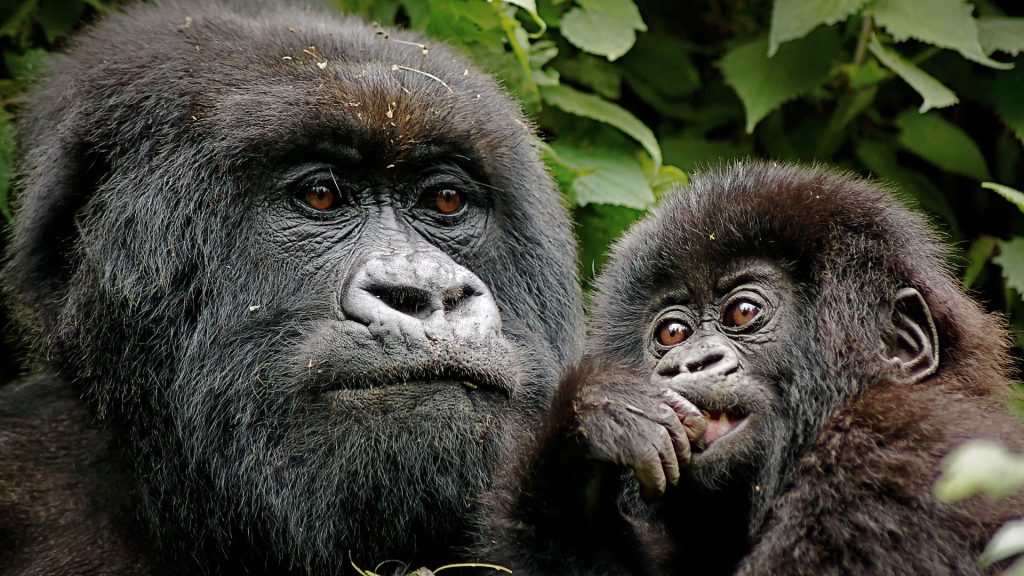
That hour often becomes one of the most memorable moments of the safari. Visitors may observe a silverback resting nearby, females feeding, juveniles climbing branches, young gorillas playing, or family members communicating through movements and vocalizations.
The experience feels particularly powerful because visitors stand inside the gorillas’ natural environment. Leaves may cover the ground, insects move through the vegetation, birds call from the canopy, and mist may hang between the trees. Nothing about the environment resembles a staged wildlife display.
Experience mountain gorilla trekking in Uganda’s Bwindi Impenetrable National Park on a safari
Where to Trek
Uganda offers gorilla trekking in two national parks: Bwindi Impenetrable National Park and Mgahinga Gorilla National Park. Although both protect mountain gorillas, their landscapes and trekking arrangements differ.
Bwindi remains the better-known choice because it contains several trekking sectors and numerous habituated gorilla families. Mgahinga provides an excellent alternative, particularly for visitors interested in combining gorilla trekking with the spectacular Virunga volcanic landscape.
Choosing between the two depends on permit availability, lodge preferences, desired scenery, travel route, and other safari activities.
Bwindi Forest
Bwindi Impenetrable National Park lies in southwestern Uganda near the borders with Rwanda and the Democratic Republic of Congo. The forest covers rugged hills and valleys filled with dense vegetation, streams, giant trees, vines, ferns, and diverse wildlife.
Uganda Wildlife Authority divides gorilla trekking in Bwindi among four principal sectors: Buhoma, Ruhija, Rushaga, and Nkuringo.
Each sector has its own park headquarters, accommodation choices, road approaches, trekking routes, and gorilla families. For this reason, travelers should not reserve a lodge simply because its description says it is “near Bwindi.” A lodge located near one sector may sit several hours from another sector.
A well-designed safari matches the lodge to the sector shown on the gorilla permit.
Bwindi’s vegetation contributes to both the challenge and beauty of the trek. Trails can become muddy, slopes can become steep, and vegetation sometimes grows densely around trekking routes. However, the forest atmosphere makes the physical effort worthwhile.
Buhoma Sector
Buhoma lies on the northern side of Bwindi and has a long history of gorilla tourism. Many travelers recognize the name because the sector developed accommodation and tourism services early in Uganda’s gorilla trekking history.
The area provides a good range of lodges, from simpler accommodation to more luxurious forest properties. Buhoma also works particularly well in itineraries connecting Bwindi with Queen Elizabeth National Park through the Ishasha area.
A traveler can leave the savannah environment of Queen Elizabeth National Park and gradually approach the green highlands around Bwindi. The contrast between the two ecosystems creates a particularly interesting safari route.
Buhoma also offers opportunities to experience forest walks and community activities depending on the itinerary.
Ruhija Sector
Ruhija lies on the eastern side of Bwindi. The area sits at relatively high elevation and frequently attracts visitors interested in both gorillas and birdlife.
Travelers who appreciate quieter mountain landscapes often enjoy staying around Ruhija. The surrounding hills provide impressive views, especially during clear mornings when mist rises from the valleys.
Road conditions can become challenging during heavy rain, so suitable safari vehicles play an important role. However, the journey itself reveals rural Uganda through tea plantations, villages, farmland, hills, and forest scenery.
Ruhija can also connect conveniently with Kabale and other parts of southwestern Uganda.
Rushaga Sector
Rushaga lies in southern Bwindi and serves as another important base for gorilla trekking. The surrounding landscape combines rainforest, rolling hills, farms, and distant mountain views.
The sector has grown substantially as a gorilla tourism destination and now provides accommodation across several price categories.
Rushaga can work well for visitors approaching Bwindi through Kisoro. Furthermore, travelers using domestic flights to Kisoro can continue by road to the southern areas of Bwindi.
Because the region contains steep terrain and winding roads, journey times can appear longer than the distance suggests. Travelers should therefore follow realistic schedules rather than relying only on kilometer calculations.
Nkuringo Sector
Nkuringo also lies in southern Bwindi and offers impressive views across Uganda’s southwestern highlands. Some viewpoints reveal the Virunga volcanoes in the distance when weather conditions remain clear.
The landscape around Nkuringo feels dramatic because steep hills descend toward deep valleys. Consequently, the area attracts visitors who appreciate scenery in addition to wildlife.
Treks can involve physically demanding terrain. However, visitors who prepare properly often find the challenge adds to the sense of achievement.
Nkuringo combines particularly well with routes involving Kisoro, Lake Mutanda, Mgahinga Gorilla National Park, or the southern part of Bwindi.
Mgahinga Park
Mgahinga Gorilla National Park lies farther south near Kisoro and forms part of the larger Virunga landscape. Uganda Wildlife Authority describes road access from Kampala to Kisoro as roughly nine hours under suitable conditions and notes that flights from Entebbe to Kisoro take around one hour and ten minutes.
Mgahinga provides a striking environment. Bamboo zones, montane forest, volcanic slopes, and the dramatic Virunga peaks create scenery that differs from much of Bwindi.
Travelers may combine gorilla trekking with golden monkey tracking, hiking, cultural experiences, or longer adventures around the Virunga region.
For a Polish traveler who enjoys mountains, Mgahinga can feel especially appealing. Poland has its own strong hiking culture associated with destinations such as the Tatra Mountains, and visitors accustomed to walking holidays may enjoy the physical and scenic nature of southwestern Uganda.
Nevertheless, African mountain forests create very different walking conditions. Humidity, mud, tangled vegetation, changing weather, and altitude all influence the experience.
Poland to Uganda
Most travelers planning gorilla trekking from Poland begin their African journey by flying to Entebbe International Airport.
Entebbe serves as Uganda’s principal international gateway and lies beside Lake Victoria. After arrival, travelers can stay overnight in Entebbe, continue toward Kampala, take a domestic flight to southwestern Uganda, or begin a road safari.
Travelers departing from Poland generally need a connecting flight because Uganda does not usually form part of Poland’s direct long-haul network. Routing options depend on the airline schedule and departure airport available at the time of booking.
Warsaw normally provides the greatest selection of international connections. However, travelers starting from Kraków, Gdańsk, Katowice, Wrocław, Poznań, or other cities may connect through another European or Middle Eastern hub.
Flight schedules change regularly. Therefore, travelers should compare total journey time rather than focusing only on ticket price. A slightly more expensive ticket may avoid a very long connection and make the first day of the safari much more comfortable.
Flight Planning
Good flight planning matters because gorilla permits correspond to specific trekking dates. A delayed arrival can create serious problems if the itinerary places the gorilla trek immediately after the international flight.
For that reason, travelers should usually arrive in Uganda at least one day before beginning the long transfer toward Bwindi or Mgahinga. An overnight stay in Entebbe creates a useful buffer for delayed baggage, schedule changes, or late international arrivals.
Travelers should also examine baggage allowances carefully. International tickets and domestic African flights may apply different baggage restrictions. Anyone planning to fly from Entebbe to Kihihi or Kisoro should confirm the luggage rules for the chosen domestic carrier before leaving Poland.
Soft-sided luggage often works better on safari than large hard-shell suitcases because guides can arrange flexible bags more easily inside safari vehicles and smaller aircraft.
Entebbe Arrival
After landing at Entebbe International Airport, travelers complete immigration procedures, collect luggage, and meet their safari representative.
For first-time visitors to East Africa, arrival can feel exciting. The warm air, tropical vegetation, Lake Victoria environment, and busy streets immediately signal that the traveler has reached a very different part of the world.
A prearranged airport transfer makes the arrival simpler, particularly after a long flight from Poland. Instead of negotiating transport while tired, visitors can meet their driver-guide and continue directly to their accommodation.
Entebbe offers many hotels and guesthouses, which makes the town a practical location for the first and final nights of a Uganda safari.
Uganda Visa
Polish passport holders should check Uganda’s current immigration requirements before travel and complete the appropriate visa process in advance when required.
Uganda’s Directorate of Citizenship and Immigration Control currently directs visa applicants to complete applications online. For a single-entry tourist visa, the immigration authority lists a passport bio-data page with at least six months’ validity, a travel itinerary or tour plan, a recent passport photograph, and accommodation information among the tourism requirements. The listed single-entry tourist visa fee is USD 50 at the time of writing.
Travelers should use Uganda’s official immigration portal rather than unverified third-party websites that may charge unnecessary service fees.
Visitors who plan to combine Uganda, Kenya, and Rwanda may also investigate the East African Tourist Visa. Uganda’s immigration authority states that this visa covers Uganda, Kenya, and Rwanda for tourism, remains valid for up to 90 days, and currently costs USD 100. The country that issues the visa should serve as the traveler’s first entry point.
Because immigration rules can change, Polish travelers should verify requirements before purchasing flights and again shortly before departure.
Yellow Fever
Travel health preparation deserves the same attention as flights and permits.
Uganda requires international travelers over one year of age to meet its yellow fever vaccination entry requirement, according to information reported by the World Health Organization. WHO also notes that an international yellow fever vaccination certificate becomes valid ten days after vaccination and that a valid certificate can remain valid for life under international health regulations.
Travelers should consult an appropriate travel-health professional in Poland well before departure. Depending on personal health, travel duration, itinerary, and medical history, a clinician can also discuss malaria prevention, routine vaccinations, insect-bite prevention, food hygiene, and any other relevant health precautions.
Visitors should carry required health documentation during their journey rather than placing every document inside checked luggage.
Gorilla Permits
A gorilla permit gives a visitor authorization to participate in a scheduled trek on a particular date and in a designated trekking area.
Permits have limited availability because wildlife authorities control the number of visitors who approach habituated gorilla families. This approach protects the animals while maintaining the quality of the experience.
Consequently, travelers should secure trekking permits before finalizing non-refundable arrangements whenever possible.
Uganda Wildlife Authority states that foreign non-resident gorilla and chimpanzee permits should be purchased through a tour operator licensed by the Uganda Tourism Board. UWA also advises travelers to verify the operator’s licensing status.
Permit prices can change when Uganda Wildlife Authority introduces a new conservation tariff. The public UWA publications page still prominently displays the July 2024–June 2026 tariff at the time of writing, so travelers planning trips after that tariff period should request the current rate rather than relying on an old online article.
When Trumpet Adventures prepares a quotation, travelers should ask for the current permit rate for their exact trekking date.
Book Early
Gorilla trekking attracts travelers from many countries. Therefore, permits for popular travel months can disappear well before the trekking date.
Booking early provides several advantages. First, travelers gain more flexibility in choosing their preferred dates. Second, they can select accommodation near the correct trekking sector. Third, they have more time to compare suitable flights from Poland.
Early planning becomes especially important for couples, families, or small groups who need several permits for the same date.
A single traveler may sometimes find one remaining space, while securing four or six permits together can prove more difficult.
Visitors who plan to travel during European holiday periods should begin organizing the safari well in advance.
Best Travel Time
Gorilla trekking takes place throughout the year. Uganda’s tropical climate means rain can occur during any month, particularly in mountain forests.
However, some months generally experience drier conditions than others. Drier periods can make trails easier to walk because excessive rainfall creates slippery mud.
Nevertheless, travelers should not expect a completely dry rainforest. Bwindi’s lush appearance depends on moisture, and showers remain possible even during comparatively dry periods.
Wet-season travel also has advantages. Landscapes appear intensely green, cloud formations create beautiful photography, and some travel periods may feel quieter.
Instead of choosing dates based solely on rainfall, Polish travelers should consider flight prices, holiday schedules, permit availability, lodge availability, and the other safari destinations they want to visit.
Polish Winter Travel
One attractive option involves traveling during the Polish winter.
Leaving cold European temperatures and arriving in tropical East Africa creates a dramatic change of environment. While Poland may experience snow, short daylight hours, and freezing conditions, Uganda offers green landscapes and generally mild to warm daytime weather.
However, visitors should not assume that every part of Uganda feels hot.
Bwindi and Mgahinga sit at higher elevations. Early mornings, rainy periods, and evenings can become cool. Therefore, trekkers still need a light fleece or jacket.
This combination may actually suit Polish visitors well because they can escape severe winter weather without facing constant extreme tropical heat in the gorilla highlands.
Road to Bwindi
Traveling by road from Entebbe or Kampala to Bwindi takes most of a day, depending on traffic, weather, road conditions, stops, and the final trekking sector.
Although the transfer is long, it introduces travelers to Uganda.
The route passes towns, rural communities, agricultural landscapes, roadside markets, hills, wetlands, and changing vegetation. Travelers gradually leave the more populated central region and approach southwestern Uganda’s rolling highlands.
A good safari guide breaks the journey up with practical stops. Travelers may stop for meals, viewpoints, refreshments, or other attractions depending on the itinerary.
Rather than viewing the drive purely as transportation, visitors can treat it as their first introduction to everyday Uganda.
Flying to Bwindi
Travelers with limited time can fly from Entebbe to an airstrip serving southwestern Uganda.
Kihihi works particularly well for northern Bwindi, including access toward Buhoma. Kisoro serves travelers heading toward southern Bwindi or Mgahinga.
Uganda Wildlife Authority notes that scheduled or charter flights serving Bwindi take roughly one hour and ten minutes, followed by a 4WD transfer to the relevant lodge or trekking area.
Flying reduces road time considerably. Therefore, visitors planning a shorter holiday from Poland may prefer a fly-in gorilla safari.
However, road safaris reveal more of the countryside and often work better for travelers who want to combine several national parks.
Choosing Transport
The choice between road and air depends on time, budget, comfort preferences, and the structure of the safari.
A traveler with only four or five days in Uganda may benefit from domestic flights. In contrast, someone spending ten to fourteen days in the country can travel overland and include several wildlife destinations.
Road travel also allows visitors to stop at additional attractions. For example, a safari might connect Bwindi with Queen Elizabeth National Park before continuing toward Kibale Forest.
Domestic flying prioritizes speed. Road travel prioritizes variety and a deeper sense of the landscape.
Neither option automatically creates a better safari. The best arrangement depends on the traveler’s priorities.
Trekking Day
Gorilla trekking day normally begins early.
Guests wake before sunrise or shortly afterward, eat breakfast, prepare their equipment, and travel to the relevant park headquarters.
Arriving at the correct headquarters matters. Bwindi contains multiple trekking sectors, and the wrong starting point can be a considerable distance away.
During the ranger briefing, visitors learn how the trek works and receive instructions for behaving around gorillas. Rangers then organize trekking groups and allocate gorilla families.
Some groups may begin walking directly from the headquarters, while others may drive to a trailhead before entering the forest.
Excitement normally grows quickly as the group disappears beneath the canopy.
Inside the Forest
Walking through Bwindi can become an adventure even before the gorillas appear.
The forest contains steep slopes, tangled vegetation, streams, damp ground, roots, and narrow paths. Sunlight may filter through openings in the canopy before disappearing again under thick vegetation.
Guides and trackers communicate as they search for signs of the gorilla family. They may examine feeding remains, dung, nests, broken vegetation, and fresh tracks.
Visitors should walk at a sustainable pace rather than rushing. The trek is not a race.
When slopes become difficult, trekkers can request assistance. Local porters also provide valuable help by carrying bags and supporting visitors over challenging terrain.
Hiring a porter contributes directly to local livelihoods while making the walk more comfortable.
Meeting Gorillas
Few wildlife experiences compare with the moment when a ranger quietly announces that the gorillas are close.
Conversation becomes softer. Cameras come out. Visitors follow instructions carefully as they move toward the family.
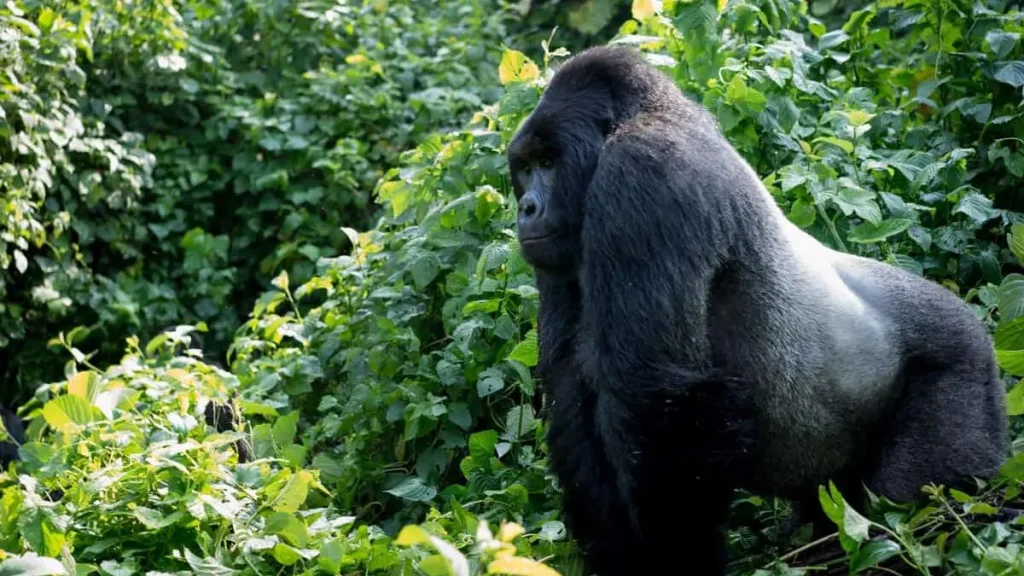
The first sight may involve a silverback sitting among leaves, a juvenile climbing a tree, or a female feeding beside thick vegetation.
Because mountain gorillas share physical characteristics and behaviors that humans instinctively recognize, the encounter can feel remarkably personal.
A silverback’s size immediately commands attention. Yet visitors often become equally fascinated by smaller details: hands selecting vegetation, youngsters playing, mothers watching infants, or gorillas simply resting together.
The experience encourages observation rather than action. Visitors do not need to create entertainment because the gorillas’ natural behavior provides the entire spectacle.
The One-Hour Experience
Standard gorilla tracking generally allows visitors to spend about one hour with the habituated family once it has been located.
That hour passes quickly.
At first, visitors may concentrate heavily on photography. However, constantly looking through a camera can reduce the emotional impact of the encounter.
A better approach involves taking photographs while also putting the camera down occasionally and simply watching.
Notice how the gorillas move. Listen to leaves breaking around them. Observe the difference in size between juveniles and adults. Watch how individuals react to one another.
These moments often remain stronger in memory than hundreds of nearly identical photographs.
Physical Fitness
Travelers do not need to become professional athletes before gorilla trekking. Nevertheless, basic fitness improves the experience considerably.
Visitors should prepare for uneven ground, hills, potentially muddy conditions, and several hours of walking.
Someone living in Warsaw or another relatively flat urban environment can prepare by taking regular long walks and adding stairs or hills to the routine.
Travelers who live near southern Poland have excellent opportunities for preparation in hillier landscapes. However, they should remember that a tropical forest differs significantly from European hiking trails.
Humidity, vegetation, mud, and altitude can increase the challenge.
Regular walking several weeks before departure can make trekking day much more enjoyable.
Age Requirements
Families traveling from Poland should check the official minimum age requirement for gorilla trekking when making a booking.
Parents often build a Uganda safari that combines gorilla trekking for eligible family members with alternative activities for younger children.
A customized itinerary can include wildlife drives, cultural visits, nature experiences, boat trips, and lodge activities so that the holiday remains rewarding for the entire family.
Because age policies and activity conditions may change, travelers should confirm current rules during the permit-booking process.
What to Wear
Correct clothing greatly improves comfort during a gorilla trek.
Long trousers protect the legs from vegetation, insects, mud, and scratches. A lightweight long-sleeved shirt provides similar protection for the arms.
Strong walking shoes or hiking boots with reliable grip make a significant difference on slippery slopes. Travelers should use footwear they have already worn in Poland rather than bringing brand-new boots for their first outing in Bwindi.
Gaiters can help keep mud, insects, and vegetation away from the lower legs.
A light waterproof jacket belongs in every trekking bag because rain can arrive unexpectedly.
Garden-style gloves can also protect the hands when visitors need to steady themselves against branches or vegetation.
Neutral outdoor clothing works well. Visitors do not need elaborate expedition equipment, but they should prioritize practical items over fashion.
Packing Essentials
A successful gorilla safari requires surprisingly little specialized equipment, although several items deserve space in the suitcase.
Travelers should bring comfortable trekking footwear, long trousers, long-sleeved shirts, a waterproof layer, sun protection, insect repellent, personal medication, a small daypack, a reusable water bottle, camera equipment, spare batteries, charging accessories, and appropriate travel documents.
Binoculars also add value because Bwindi contains abundant birdlife and other primates.
Visitors should pack important medication, documents, electronics, and at least some essential clothing in hand luggage during the international journey from Poland.
If checked luggage arrives late, these essentials allow the safari to continue with less disruption.
Camera Equipment
Gorilla photography can produce extraordinary images, but the forest creates challenging lighting.
Dense vegetation reduces available light, while gorillas may move between shadow and brighter openings.
A camera that performs well at higher ISO settings can help. However, modern smartphones can also produce excellent photographs under suitable conditions.
Visitors should know their camera controls before trekking. The gorilla encounter is not the ideal moment to begin reading a manual.
Extra batteries matter because cold mornings, video recording, and constant photography can reduce battery life.
A protective bag or rain cover also helps keep equipment dry.
Most importantly, visitors must follow ranger instructions about photography and flash use.
Gorilla Etiquette
Responsible behavior protects both visitors and gorillas.
Rangers explain the current rules during the morning briefing, and trekkers should follow those instructions throughout the encounter.
Visitors must remain attentive to guidance about distance, movement, noise, food, photography, illness, and interactions with the gorillas.
Mountain gorillas remain wild animals despite habituation. Habituation means they tolerate carefully managed human presence; it does not transform them into pets.
Trekkers should therefore remain calm and avoid attempting to touch, feed, follow, or provoke an animal.
The ranger’s instructions always take priority over getting a photograph.
Health and Gorillas
Gorillas share biological similarities with humans, which also means human illnesses can pose risks to them.
Visitors who feel unwell around trekking day should communicate openly with their guide or tour operator.
Missing a highly anticipated trek would feel disappointing, especially after traveling from Poland. Nevertheless, protecting an endangered primate population must remain the priority.
Travelers can reduce general health risks by practicing good hygiene during the trip, carrying suitable medication, sleeping adequately, drinking safe water, and following advice from travel-health professionals.
Porters
Hiring a porter represents one of the most practical decisions a visitor can make on trekking day.
Porters carry daypacks, water, cameras, and clothing. They can also provide a steadying hand on steep or slippery sections.
Even fit travelers often appreciate the assistance because forest conditions can change rapidly.
Furthermore, porter work creates direct economic benefits for communities surrounding the protected areas.
Tourism becomes more sustainable when local people receive tangible benefits from conservation.
Therefore, hiring a porter should not be viewed only as a luxury. It can support both visitor comfort and community participation in tourism.
Where to Stay
Bwindi and Mgahinga provide accommodation across different price ranges.
Budget-minded visitors can choose simpler lodges that provide the essentials. Mid-range travelers gain additional comfort, while high-end properties may offer premium rooms, scenic locations, fireplaces, elaborate meals, spas, or highly personalized service.
Location matters more than luxury level.
A beautiful lodge several hours from the assigned trekking headquarters creates logistical problems. For this reason, Trumpet Adventures should first confirm the gorilla trekking sector and then recommend accommodation nearby.
Travelers should also consider whether they prefer forest views, mountain views, community access, privacy, or easier road access.
Budget Safaris
Gorilla trekking requires a significant investment because the permit itself forms a substantial part of the safari cost.
However, travelers can control other expenses.
Choosing comfortable but simple accommodation, traveling by road instead of domestic air, joining a small group where appropriate, and limiting unnecessary extras can reduce the total budget.
A budget safari should still prioritize safe transportation, reliable scheduling, good guiding, suitable accommodation, and a genuine gorilla permit.
Travelers should become cautious when a quote appears dramatically cheaper than comparable options.
Conservation permits, vehicles, fuel, accommodation, staff, park access, and logistics carry real costs.
Mid-Range Safaris
Mid-range gorilla safaris suit many Polish travelers because they balance comfort and price.
Typical arrangements include private or small-group transportation, comfortable en-suite accommodation, meals according to the itinerary, an experienced driver-guide, airport transfers, and carefully coordinated gorilla trekking logistics.
After a long trek, a warm shower, a good meal, and a comfortable bed can feel extremely valuable.
Mid-range lodges also often occupy attractive settings without reaching the cost of luxury properties.
For couples and first-time visitors to Uganda, this category frequently provides an excellent balance.
Luxury Safaris
Luxury gorilla trekking focuses on convenience, high-end accommodation, premium service, and carefully managed travel time.
Visitors may choose fly-in arrangements to Kihihi or Kisoro, stay in upscale forest lodges, book private transfers, and combine gorilla trekking with luxury properties in other Ugandan national parks.
Luxury does not change the gorilla encounter itself. Every trekker follows the conservation rules once inside the forest.
However, the experience before and after trekking can become considerably more comfortable.
For honeymooners, anniversary travelers, photographers, or visitors with limited vacation time, luxury arrangements may provide worthwhile benefits.
Safari Costs
The total cost of gorilla trekking from Poland depends on several components.
International flights form one major expense. Gorilla permits form another. Accommodation, vehicle hire, fuel, driver-guide services, meals, park fees, domestic flights if selected, visas, insurance, tips, and personal expenses complete the budget.
The number of travelers also influences the per-person cost.
Two people sharing a safari vehicle generally pay less per person for transportation than one private traveler. Small groups can divide certain vehicle expenses further.
The accommodation category creates another major difference. A budget lodge and a luxury forest lodge can differ dramatically in price even though both guests join gorilla treks in the same national park.
For this reason, travelers should request a detailed quotation based on their actual dates and preferences rather than relying on a generic online price.
Currency and Payments
Uganda uses the Ugandan shilling, although many tourism services quote rates in US dollars.
Travelers from Poland should plan how they will access money before departure.
Credit cards work in many hotels and established tourism businesses, but cash remains useful for tips, small purchases, community activities, and locations where card systems become unavailable.
Visitors should inform their banks about international travel when necessary and understand foreign transaction fees.
Carrying all holiday money in cash creates unnecessary risk. A combination of payment methods usually works better.
Travelers should also keep emergency money separate from the main wallet.
Travel Insurance
Comprehensive travel insurance deserves serious attention.
A gorilla safari involves international flights, expensive permits, remote destinations, road travel, outdoor activities, and substantial prepaid costs.
Insurance should suit the activities included in the itinerary and provide appropriate medical and evacuation coverage.
Travelers should read the policy rather than assuming every adventure activity receives automatic protection.
They should also understand cancellation conditions.
Because gorilla permits follow specific terms, insurance may become particularly useful if an unexpected medical or travel problem affects the journey.
Polish travelers should purchase suitable coverage before beginning the safari.
Uganda Safety
Most visitors experience Uganda through organized tourism routes with professional guides and established lodges.
Nevertheless, sensible travel habits remain important.
Travelers should protect passports, avoid displaying large amounts of cash, follow guide advice, use reliable transportation, and respect local laws.
In national parks, wildlife creates a different type of safety concern. Visitors should never approach animals without guidance or leave safari vehicles where rules prohibit it.
During gorilla trekking, ranger instructions provide the main safety framework.
A reputable tour operator also monitors travel logistics and adjusts routes when necessary.
Food in Uganda
Food becomes an enjoyable part of many Uganda safaris.
Safari lodges commonly serve a mixture of international dishes and Ugandan ingredients. Travelers may encounter matooke, rice, potatoes, sweet potatoes, beans, vegetables, chicken, beef, fish, fresh fruit, and various sauces.
Those interested in local cuisine can ask guides about appropriate places to sample Ugandan food.
Travelers with dietary restrictions should communicate them before the safari. Vegetarian, vegan, gluten-free, and other dietary needs can often be accommodated more easily when lodges receive advance notice.
Visitors should also carry snacks for long road transfers or trekking days when appropriate.
Drinking Water
Travelers should maintain good hydration, especially during trekking.
However, visitors should drink safe bottled or properly treated water rather than assuming all tap water is suitable for drinking.
Safari vehicles and lodges often provide drinking water, depending on the booked package.
A reusable bottle reduces single-use plastic when travelers can refill it safely.
During the gorilla trek, carrying enough water matters because humidity and steep terrain increase physical effort.
Visitors should begin hydrating before they feel thirsty.
Language
Uganda uses English widely in tourism, which makes communication relatively easy for Polish visitors who speak English.
Safari guides, lodge staff, rangers, and airport personnel commonly use English when interacting with international guests.
Uganda also contains many local languages. Learning a few greetings can create enjoyable interactions with communities even when visitors cannot hold a complete conversation.
Travelers do not need to speak a Ugandan language to participate in gorilla trekking.
However, approaching cultural interactions with curiosity and respect greatly improves the experience.
Cultural Respect
A safari passes through communities where people live, work, farm, study, worship, and raise families.
Visitors should avoid treating villages as attractions without regard for residents’ privacy.
Ask before photographing people, especially children.
Follow the guide’s advice during community visits and support genuine local businesses when possible.
Travelers should also dress respectfully outside tourist lodges and understand that cultural expectations may differ from those in Poland.
Meaningful travel grows from mutual respect rather than simply collecting photographs.
Responsible Tourism
Gorilla tourism creates a powerful link between conservation and local economic opportunity.
Permit revenue contributes to wildlife protection and conservation activities, while tourism creates employment through lodges, guiding, transportation, porter services, crafts, food production, and community enterprises.
However, tourism only remains beneficial when visitors and operators behave responsibly.
Travelers should respect park rules, minimize waste, avoid disturbing wildlife, support legitimate tourism businesses, and treat local communities fairly.
Choosing responsible operators also reduces the risk of supporting unauthorized or unethical businesses.
Conservation Value
Mountain gorilla conservation requires long-term investment.
Rangers protect habitats, researchers monitor populations, veterinary teams respond to health concerns, tourism authorities regulate encounters, and communities living around parks play an essential role.
Uganda Wildlife Authority reported in September 2026 that Bwindi’s gorilla population had increased from about 300 individuals recorded in 1992 to 459 during the 2018 census. UWA noted that updated genetic analysis from the 2025/2026 survey was still awaiting release at the time of its September 2026 publication.
These figures show why precise wording matters. Travelers may encounter websites claiming newer population numbers, but the most recent fully published figure for Bwindi should not be confused with preliminary or unreleased survey results.
Tourism contributes to the broader conservation system when it operates under strict rules.
Combine with Queen Elizabeth
Queen Elizabeth National Park fits naturally into many gorilla trekking itineraries.
Travelers can experience savannah wildlife before or after entering Bwindi’s rainforest.
Game drives may reveal elephants, buffaloes, antelopes, lions, warthogs, and other animals. Boat activities offer opportunities to observe wildlife around waterways.
The Ishasha area in the southern part of the park also attracts attention for its tree-climbing lions.
Combining Queen Elizabeth with Bwindi creates a strong contrast between open savannah and dense tropical forest.
For a traveler coming all the way from Poland, this combination makes excellent use of the long international journey.
Combine with Kibale
Kibale National Park adds another primate experience to a gorilla safari.
The park has become particularly famous for chimpanzee tracking.
Gorillas and chimpanzees offer very different encounters. Mountain gorillas often spend considerable time feeding or resting on the ground, while chimpanzees can move quickly through forest vegetation and trees.
Experiencing both gives visitors a broader understanding of Uganda’s primate diversity.
A longer itinerary can connect Kibale, Queen Elizabeth National Park, and Bwindi into a classic western Uganda safari route.
Murchison Falls
Travelers with more time can extend the safari north toward Murchison Falls National Park.
The park offers a different environment from Bwindi, with broad savannahs, the Nile, large mammals, and the dramatic Murchison Falls.
A longer Uganda journey might include Murchison Falls, Kibale, Queen Elizabeth, and Bwindi before returning to Entebbe.
Such an itinerary works particularly well for Polish visitors spending two weeks or more in Uganda.
Although the road distances become substantial, every region offers a different ecosystem.
Lake Bunyonyi
Lake Bunyonyi can provide a relaxing addition to a gorilla safari.
The lake lies among steep terraced hills in southwestern Uganda and offers a peaceful atmosphere after demanding trekking activities.
Visitors may enjoy canoeing, boat excursions, views, birdlife, village visits, or simply resting beside the water.
A relaxed night near Lake Bunyonyi can work particularly well between Bwindi and the return journey toward Kampala or Entebbe.
Travelers should allow sufficient time rather than attempting to squeeze too many destinations into a short safari.
Lake Mutanda
Lake Mutanda near Kisoro offers another beautiful highland setting.
The lake provides striking views toward the Virunga volcanoes under clear conditions.
Travelers visiting southern Bwindi or Mgahinga can incorporate Lake Mutanda into the itinerary more easily than visitors trekking from northern Bwindi.
Its location makes it particularly suitable for slower itineraries that emphasize scenery, walking, photography, and relaxation alongside gorilla trekking.
Golden Monkeys
Mgahinga offers travelers the opportunity to add golden monkey tracking.
Golden monkeys live in the Virunga region and provide a very different primate encounter from mountain gorillas.
They move quickly through bamboo and forest vegetation, creating an energetic wildlife experience.
Combining gorillas and golden monkeys can turn a short Mgahinga visit into a richer primate safari.
Travelers interested in hiking can also investigate additional activities around the volcanic landscape.
Suggested 4-Day Safari
A short gorilla itinerary works for travelers who have limited vacation time.
On the first day, guests can arrive at Entebbe International Airport and spend the night in Entebbe.
The following morning, they can fly to Kihihi or Kisoro depending on the trekking sector and transfer to their lodge near Bwindi.
The third day centers on gorilla trekking. After the trek, guests return to the lodge to rest.
On the final day, they transfer back to the airstrip, fly to Entebbe, and connect with their international departure when flight schedules allow.
This arrangement reduces road time but leaves little room for delays. Therefore, international flight timing requires careful planning.
Suggested 5-Day Safari
Five days provide more flexibility.
A visitor can arrive in Entebbe, travel toward Bwindi by road on the second day, trek gorillas on the third day, spend part of the fourth day exploring southwestern Uganda, and return toward Entebbe before departure.
Alternatively, travelers can use domestic flights and add a second activity such as community tourism, Lake Mutanda, Lake Bunyonyi, or golden monkey tracking.
The fifth day also provides valuable scheduling space for travelers coming from Poland, especially when international connections involve long journeys.
Suggested 7-Day Safari
A seven-day safari creates enough time to combine gorillas with classic savannah wildlife.
After arriving in Entebbe, guests can travel toward Queen Elizabeth National Park, enjoy game viewing and a boat safari, continue toward Bwindi, complete the gorilla trek, and then return through the southwest.
This itinerary provides considerably more variety than a gorilla-only trip.
Visitors see towns, farms, savannahs, wildlife, lakes, mountains, and rainforest within one journey.
For many first-time visitors to Uganda, seven days represents a good starting point.
Suggested 10-Day Safari
Ten days allow Polish travelers to explore Uganda at a more comfortable pace.
The itinerary can include Kibale Forest for chimpanzees, Queen Elizabeth National Park for wildlife, Bwindi for gorillas, and Lake Bunyonyi or another highland destination for relaxation.
Travelers spend less time rushing between destinations and gain more opportunities to appreciate each environment.
A longer trip also makes the cost of international flights from Poland feel more worthwhile because the visitor experiences a broader part of Uganda.
Romantic Gorilla Safaris
Uganda can work extremely well for couples.
A honeymoon or anniversary journey can combine intimate forest lodges, private safari vehicles, scenic meals, gorilla trekking, boat trips, and relaxing nights near lakes.
Couples can also choose luxury fly-in arrangements when they want to reduce road travel.
The gorilla trek itself often becomes a shared memory that stands apart from conventional beach or city holidays.
For couples planning a special trip from Poland, adding several relaxing days after the trek creates better balance than filling every day with demanding activities.
Solo Travelers
Solo travelers can also enjoy gorilla trekking.
Traveling alone offers flexibility and allows visitors to focus entirely on their preferred activities.
However, private road transportation can cost more per person because one traveler carries the full vehicle expense.
Joining an available small group may reduce costs, although fixed group departures limit flexibility.
Solo travelers should compare both arrangements.
A private safari provides control over photography stops, departure times, and route choices, while group travel offers companionship and shared costs.
Group Travel
Small groups of friends from Poland can organize a private Uganda safari together.
Sharing transportation reduces some per-person costs and creates a social experience.
However, gorilla permits still require individual payment for every trekker.
Groups should plan early because securing several permits for the same trekking date requires greater availability than booking one or two permits.
Accommodation also becomes easier to coordinate when travelers confirm dates well in advance.
A group organizer should collect passport details and other booking information early so the tour operator can make arrangements efficiently.
Photography Safaris
Photographers may want more than one gorilla trek.
A single hour with a gorilla family can produce excellent images, but forest light, vegetation, gorilla position, and weather remain unpredictable.
Booking two trekking days provides a second opportunity under potentially different conditions.
Photographers should also consider chimpanzees, birds, landscapes, tree-climbing lions, elephants, and local scenery when designing the safari.
Uganda offers enough visual variety to justify carrying serious camera equipment.
However, every photographer should remember that wildlife welfare comes before the photograph.
Trekking Challenges
The most common challenge involves terrain.
Rain can transform forest paths into mud within a short time. Steep climbs require energy, while descents can become slippery.
Humidity creates another challenge, particularly for travelers accustomed to Poland’s cooler climate.
Furthermore, the duration remains unpredictable because gorillas move freely.
Mental preparation helps. Instead of expecting an easy one-hour walk, visitors should prepare for a serious forest hike and consider anything easier a bonus.
Proper footwear, water, a porter, rain protection, and reasonable fitness solve many of the practical difficulties.
Managing Expectations
Wildlife experiences never follow a script.
A gorilla may face away from visitors. Vegetation may partly block photographs. Rain may begin. A silverback may spend much of the encounter resting.
These possibilities do not make the experience unsuccessful.
The purpose of gorilla trekking involves entering a natural ecosystem and observing wild animals according to their normal behavior.
Visitors who accept that reality often enjoy the experience more than travelers focused on reproducing a particular social-media photograph.
Patience becomes part of responsible wildlife tourism.
Polish Travelers and Climate
Preparing for Uganda requires thinking beyond the word “Africa.”
Uganda’s equatorial location creates warm conditions in many lowland areas, but altitude strongly affects temperatures.
Bwindi’s highland environment may feel cool during mornings and evenings. Rain also lowers temperatures quickly.
Therefore, travelers should pack layers.
A lightweight fleece from Poland can become surprisingly useful around the lodge, while breathable clothing works better during the daytime trek.
The goal is flexibility rather than heavy winter clothing.
Electricity
Travelers should check Uganda’s current electrical plug standards before departure and bring a suitable travel adapter.
Camera users should carry enough charging equipment for batteries, phones, power banks, and other electronics.
Some remote lodges may operate generators or solar systems and may not supply unrestricted electricity throughout the night.
Therefore, guests should charge devices whenever power becomes available.
A power bank offers useful backup, especially for phones.
Photographers carrying multiple batteries should establish a charging routine each evening.
Internet Access
Mobile coverage has expanded considerably across Uganda, although forest and mountain areas can still experience weak or inconsistent connections.
Many lodges provide Wi-Fi, but speeds may differ from what travelers expect in Poland.
Visitors should not plan important online work around guaranteed high-speed internet while staying near Bwindi.
In fact, limited connectivity can improve the safari experience by encouraging travelers to focus on the forest and wildlife.
Anyone who must remain connected for work should discuss connectivity with the selected lodge before booking.
Time Difference
Uganda uses East Africa Time throughout the year, while Poland changes between standard time and daylight-saving time.
As a result, the time difference can vary depending on the season.
Travelers should check the exact difference for their travel dates, especially when communicating with family, arranging business calls, or coordinating airport transfers.
Fortunately, the difference remains manageable compared with long-haul journeys to Asia or the Americas, so severe jet lag usually creates less difficulty.
The greater travel challenge often comes from the long flight journey itself rather than a major time-zone shift.
Tips and Gratitude
Tipping remains voluntary but commonly forms part of safari tourism.
Visitors may choose to tip driver-guides, trekking rangers, porters, lodge staff, and other people who provide excellent service.
Travelers should ask their tour operator for current tipping guidance because expectations can change and vary by activity.
Tips should reflect service quality rather than pressure.
Hiring porters and purchasing locally produced crafts also provide direct ways to support communities around tourism areas.
Souvenirs
Travelers often want something that recalls the gorilla experience after returning to Poland.
Locally produced crafts, artwork, baskets, carvings, textiles, coffee, and other products can make meaningful souvenirs.
Visitors should purchase responsibly and avoid wildlife products or items that may violate conservation or customs regulations.
Buying directly from community enterprises can help ensure more of the money reaches local producers.
Photographs also become powerful souvenirs, particularly when visitors create printed albums after returning home.
Why Use a Local Operator?
Organizing a Uganda gorilla trek requires coordination between permits, accommodation, vehicles, park sectors, transfer times, flights, and other safari activities.
A local tour operator understands how these pieces connect.
For example, confirming a permit in Rushaga while reserving accommodation near Buhoma would create unnecessary logistical problems.
An experienced operator can match trekking sectors with suitable lodges and realistic travel routes.
Furthermore, local guides understand road conditions, park procedures, cultural context, and wildlife areas.
This knowledge becomes especially useful for first-time visitors traveling from Poland.
Trumpent Adventures
Trumpet Adventures can help travelers design gorilla trekking holidays in Uganda according to trip length, accommodation level, interests, and budget.
A traveler can begin by providing intended travel dates, number of guests, preferred trip duration, accommodation category, and any additional destinations.
Trumpet Adventures can then structure the Uganda itinerary around available gorilla trekking dates.
The final safari may remain focused entirely on Bwindi, or it may include Queen Elizabeth National Park, Kibale, Lake Bunyonyi, Mgahinga, Murchison Falls, or other destinations.
Customizing the itinerary allows travelers to avoid paying for activities they do not want while giving more time to experiences they value most.
Booking Process
Travelers should begin with their approximate Uganda travel dates.
Next, the operator checks gorilla permit availability and identifies suitable trekking sectors.
After confirming the basic route, accommodation options can be matched to the permit location.
The traveler can then review the proposed itinerary and safari price before making the required payments according to the agreed booking terms.
International flights should fit around the final Uganda itinerary with adequate arrival and departure buffers.
Travelers should send passport details exactly as requested because permit and travel arrangements may depend on accurate identification.
When to Start Planning
Planning six months or more can provide excellent flexibility, especially for high-demand months.
However, shorter-notice safaris may still work when permits and accommodation remain available.
The important point is to check availability rather than assuming the trip is impossible.
Travelers should avoid buying restrictive flights before confirming the key safari arrangements if gorilla trekking represents the main purpose of the journey.
Permit availability should guide the final itinerary.
Common Mistakes
Several planning errors can make gorilla trekking more difficult than necessary.
Travelers sometimes underestimate road distances, reserve accommodation in the wrong Bwindi sector, arrive in Uganda too close to the trekking date, bring unsuitable shoes, pack only warm-weather clothing, or assume every online permit price remains current.
Another mistake involves creating an itinerary that includes too many destinations in too few days.
Uganda rewards slower travel.
Spending every day inside a vehicle simply to tick attractions off a list can reduce the quality of the experience.
A well-planned itinerary balances wildlife activities, transfers, meals, and rest.
Avoid Expired Information
Travel information changes.
Visa requirements, permit prices, airline schedules, park procedures, accommodation rates, and road conditions can all change after an online article appears.
For example, Uganda Wildlife Authority’s currently visible publications page still references its July 2024–June 2026 tariff, even though travelers planning later dates need to verify the tariff that applies to their actual visit.
Therefore, travelers should use blogs for general planning but verify time-sensitive details during booking.
This approach prevents unpleasant surprises.
Gorilla Trekking versus Zoos
Seeing a gorilla in a natural African forest differs fundamentally from seeing one in captivity.
The trek requires effort because visitors enter the animal’s habitat rather than expecting the animal to appear on demand.
Weather, terrain, and animal movement create uncertainty.
That uncertainty gives the experience much of its power.
The forest remains active around the visitor, and the gorillas choose where they feed, rest, and move.
For many Polish travelers, the experience changes their understanding of wildlife conservation because they see directly why protecting habitat matters.
Is Uganda Worth the Journey?
Traveling from Poland to Uganda requires significant planning, time, and expense.
However, the reward extends beyond the hour spent beside mountain gorillas.
Visitors experience African landscapes, new cultures, tropical forests, wildlife, rural communities, lakes, mountain roads, and a completely different rhythm of travel.
The gorilla encounter becomes the emotional centerpiece, but the surrounding journey gives it context.
For travelers seeking an experience that feels genuinely different from a typical European holiday, Uganda offers something exceptional.
Final Thoughts
Gorilla trekking from Poland can become one of the most memorable wildlife journeys a traveler ever takes.
The adventure begins long before entering Bwindi. It starts with choosing travel dates, securing the correct permit, planning flights from Poland, preparing travel documents, selecting accommodation, and deciding whether to explore Uganda by road or air.
Once in Uganda, the scenery gradually changes from the Lake Victoria region to rolling countryside and eventually the mist-covered forests of the southwest.
Then comes trekking morning.
After breakfast, visitors meet their rangers, enter the forest, cross streams, climb slopes, push through vegetation, and follow the trackers deeper into mountain gorilla territory.
Eventually, the guide signals that the gorillas are near.
At that moment, the long journey from Poland, the flights, the road transfers, the early morning, and the physical effort suddenly make sense.
A silverback may sit quietly among the leaves. A young gorilla may climb above the group. A mother may hold an infant nearby. For one carefully controlled hour, visitors receive the privilege of observing one of the planet’s most remarkable primates in the forest where it belongs.
Yet Uganda offers much more than that single hour.
Polish travelers can combine gorilla trekking with chimpanzees, lions, elephants, boat safaris, volcanic landscapes, beautiful lakes, community experiences, birdwatching, and some of East Africa’s most varied scenery.
The key to a successful safari is careful planning. Travelers should confirm current visa requirements, health requirements, gorilla permit prices, trekking-sector availability, flight schedules, and accommodation before departure.
Most importantly, they should allow enough time to enjoy Uganda instead of rushing through it.
Whether you are traveling alone, as a couple, with friends, or as part of a family adventure, Trumpet Adventures can design a Uganda safari around your interests, available travel dates, and preferred level of comfort.
From your arrival at Entebbe International Airport to the morning you enter the gorilla forest and the final transfer back for your flight to Poland, a carefully organized itinerary allows you to concentrate on the reason you traveled so far: experiencing Uganda and meeting the mountain gorillas in their natural home.